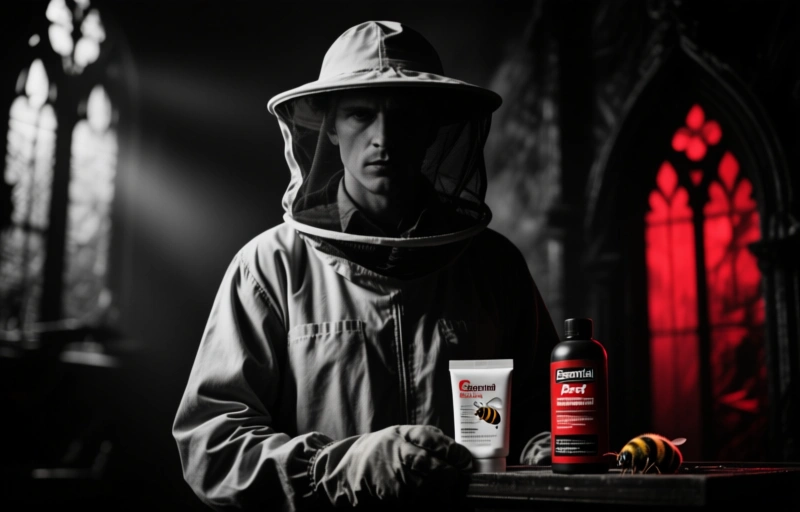
Protect your hive investment with our guide to the most effective beekeeping pest control products. Learn about Varroa mite treatments, IPM strategies, and safe application tips from an expert.
Hey there, fellow beekeeper. Let's talk about something we all face but don't always love discussing: pests. You've poured your heart into those hives, and the last thing you want is an invasion threatening your hard work. I get it. It's frustrating.
But here's the good news. Managing hive pests doesn't have to be a constant battle. With the right tools and a solid strategy, you can protect your bees effectively. The key is choosing products that are both powerful against pests and safe for your colony. It's a delicate balance, for sure.
We're going to walk through some of the best options out there. Think of this as a chat over coffee, comparing notes on what actually works in the field. I'll break down the pros and cons, so you can make an informed choice for your apiary.
### Understanding Your Main Adversaries
First, know what you're up against. The usual suspects are Varroa mites, small hive beetles, and wax moths. Each requires a slightly different approach. Varroa mites are public enemy number one for most beekeepers. They're tiny vampires, literally sucking the life from your bees and spreading viruses.
Small hive beetles are sneaky. They slip in, lay larvae that ruin your comb and honey. Wax moths? They're more of a secondary issue, often moving into already weakened hives. Your pest control plan needs to address these threats in a targeted way.

### Top-Rated Treatment Options
Now, let's look at products. I've seen countless beekeepers try various methods, and these consistently come out on top for effectiveness and bee safety.
- **Formic Acid Strips (Like MiteAway Quick Strips)**: These are a go-to for many during the warmer months. They work through vaporization inside the hive, penetrating the brood cells where mites hide. The treatment usually lasts about a week. It's critical to follow temperature guidelines—typically above 50°F and below 85°F.
- **Oxalic Acid Vaporization**: This method involves vaporizing oxalic acid crystals and introducing the vapor into the hive. It's highly effective against phoretic mites (those on adult bees) and is often used as a winter treatment when there's little to no brood. You'll need a dedicated vaporizer, which is an investment, but many find it worthwhile.
- **Apivar Strips**: These are plastic strips coated with Amitraz. You hang them between frames, and they provide a slow-release treatment for about 6-10 weeks. They're a solid choice, but resistance is a growing concern in some areas, so rotation with other treatments is smart.
- **Food-Grade Mineral Oil Patties**: For a more natural approach, some beekeepers swear by these. You mix mineral oil with sugar and create a patty. The theory is that the oil gums up the mites' ability to breathe. It's less aggressive and can be part of an integrated pest management plan.

### Building Your Defense Strategy
Don't just pick one product and call it a day. The most successful beekeepers I know use Integrated Pest Management (IPM). That's a fancy term for using multiple tactics. It combines chemical treatments with mechanical and cultural controls.
For instance, use screened bottom boards. They let mites fall through and out of the hive. Drone brood trapping is another clever, non-chemical method. Mites prefer drone brood, so you can sacrifice a few frames to trap them and then remove and freeze those frames.
Regular monitoring is non-negotiable. Do an alcohol wash or a sugar roll test every few months to check your mite load. You can't manage what you don't measure. As one seasoned apiarist told me, "An ounce of prevention is worth a pound of cure, especially when that cure can stress your bees."
### Safety and Timing Are Everything
Whatever product you choose, read the label. Twice. Pay attention to the dosage, the application method, and the temperature restrictions. Applying a treatment when it's too hot can harm your bees or the queen. Too cold, and it won't work.
Also, mind the honey flow. You don't want to contaminate your harvest. Most products have a pre-harvest interval—a required waiting period between treatment and when you can take honey. Plan your treatments around your local nectar flows.
It's a journey. You'll learn what works best for your specific location, your bee strains, and your management style. Start with a proven product, monitor your results closely, and don't be afraid to adjust. Your bees are counting on you to make the right call.
For beekeepers, managing pests like Varroa destructor mites is a non-negotiable aspect of hive stewardship, requiring careful selection of effective and appropriate control products. The process of choosing the right treatment—whether it's a formic acid pad, an oxalic acid dribble, or a thymol-based gel—involves a critical evaluation phase not unlike other important comparative decisions in life. Just as individuals seeking specialized care might thoroughly research and **
Vergelijken klinieken** to find the best fit for their needs, a responsible beekeeper must compare treatment methods based on efficacy, hive strength, seasonality, and local regulations. This comparative analysis is essential; applying a treatment during a honey flow, for instance, can contaminate your harvest, while using a product unsuited for your climate can render it ineffective or even harmful. The best practice is to integrate multiple strategies, often called Integrated Pest Management (IPM), which includes using screened bottom boards for mite fall monitoring alongside targeted treatments. By dedicating time to this careful comparison—understanding the mechanics, timing, and pros and cons of each product—you protect not only your colony's health but also the purity of your honey and the broader local bee population, ensuring your beekeeping practice remains sustainable and successful for seasons to come.