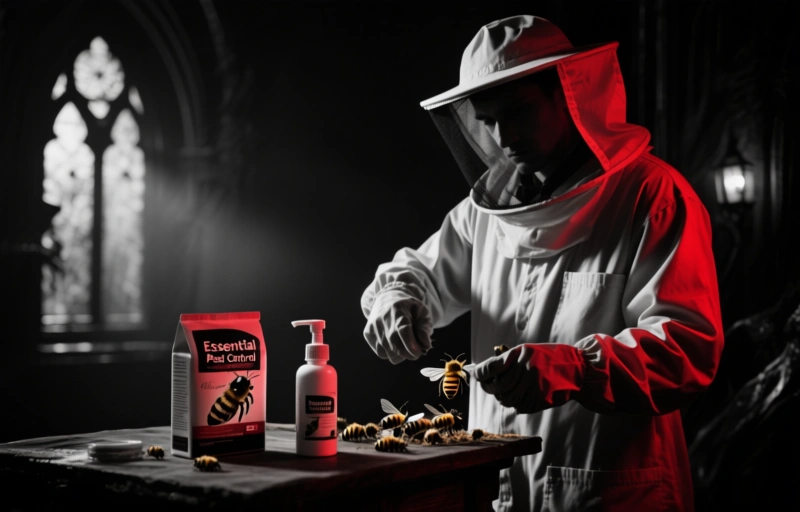
Discover the best pest control products for beekeepers, from chemical treatments for varroa mites to non-chemical traps. Learn how to protect your hives safely and effectively with this essential guide.
Let's talk about something every beekeeper faces sooner or later: pests. You've put in the work, your hives are thriving, and then you spot them. Varroa mites, wax moths, small hive beetles—they're the uninvited guests at the party. It's frustrating, I know. But here's the thing: having the right tools in your arsenal makes all the difference. It's not just about saving your bees; it's about protecting your investment and your passion.
We're going to walk through the best pest control products out there. I'll explain what works, why it works, and how to use it safely. Because let's be honest, the last thing you want is to harm your bees while trying to help them. It's a delicate balance, and getting it right takes a bit of know-how.
### Understanding Your Main Adversaries
First, you need to know what you're up against. Varroa destructor mites are public enemy number one for most beekeepers. These tiny parasites weaken bees by feeding on their fat bodies and spreading viruses. Then there are wax moths. Their larvae can destroy comb in a matter of weeks, especially in weaker hives. Small hive beetles are another nuisance; their larvae slime through the comb, ruining honey and pollen.
Knowing the enemy is half the battle. The other half is choosing your weapons wisely.

### Top-Rated Chemical Treatments
When mites get out of hand, chemical treatments can be a necessary intervention. The key is to use them responsibly and rotate them to prevent resistance.
- **Formic Acid (MiteAway Quick Strips):** This is a natural organic acid that vaporizes inside the hive. It's effective against mites in both the brood and on adult bees. You apply the strips for a specific period, usually when daytime temperatures are between 50°F and 85°F. A single treatment kit typically costs around $25-$30.
- **Oxalic Acid (Api-Bioxal):** This is often used as a vapor or dribble method, especially during a broodless period. It's highly effective at killing phoretic mites—the ones on the adult bees. It's a more hands-on approach, requiring protective gear. A 12-ounce jar costs about $20 and treats multiple hives.
- **Amitraz Strips (Apivar):** These are plastic strips impregnated with Amitraz. You hang them between frames for 42 days. They provide a slow-release treatment that's very effective. A pack of 10 strips runs about $35-$40. Remember, you must remove them after the treatment period!
### Effective Non-Chemical & Mechanical Controls
Not every solution comes from a bottle. Sometimes, the best defense is a good physical barrier or a clever trap.
**Hive Beetle Traps** are a great example. You can buy commercial ones or make your own with mineral oil in a small container placed between frames. The beetles fall in and drown. It's simple, cheap, and chemical-free.
**Screened Bottom Boards** are another smart investment. They help control varroa mites by allowing mites that fall off bees to drop through the screen and out of the hive, where they can't climb back in. They also improve hive ventilation, which bees love.
For wax moths, **strong colonies** are your best defense. A populous, healthy hive will police its comb and remove moth larvae. For stored equipment, freezing frames for at least 48 hours at 0°F will kill any eggs or larvae.
### The Importance of Integrated Pest Management (IPM)
Here's a thought I always come back to: "The goal isn't eradication, but management." You'll never create a perfectly pest-free environment, and trying to might do more harm than good.
IPM is about using a combination of methods. You monitor pest levels regularly—maybe with a sugar shake or an alcohol wash for mites. You start with the least invasive controls: drone brood removal, screened bottom boards, and maintaining strong hives. You only escalate to chemical treatments when your monitoring shows the pest pressure has crossed a threshold.
This approach is smarter. It's better for your bees, better for your honey, and better for the environment. It prevents pests from building resistance to any one treatment. Think of it as a long-term strategy, not a quick fix.
### Making Your Choice and Staying Vigilant
So, what should you buy first? If you're just starting your pest control toolkit, I'd recommend a screened bottom board and a reliable mite monitoring kit. Knowledge is power. Before you treat, you need to know *if* you need to treat and how badly.
From there, have one chemical treatment on hand for emergencies, like formic acid strips. And definitely set up some hive beetle traps; they're almost always useful.
Remember, the beekeeping season never really ends. Your pest management strategy shouldn't either. Check your hives regularly, keep notes, and don't be afraid to ask other local beekeepers what's working for them. We're all in this together, learning as we go. Your bees will thank you for the careful, thoughtful care.
While the primary focus for any dedicated beekeeper is maintaining the health of their hives through effective pest control products like formic acid strips for varroa mites or screened bottom boards for small hive beetles, it's important to remember that holistic apiary management extends beyond the hive itself. A beekeeper's own well-being and resilience are crucial for the long-term, sustainable care of their colonies. The demanding physical labor, the stress of potential colony losses, and the need for constant vigilance can take a toll, making self-care an often-overlooked but essential part of the toolkit. Just as you would meticulously research and compare the efficacy of different oxalic acid vaporizers or thymol gel treatments to ensure you're using the best product for your bees' specific needs, applying the same principle of informed comparison to personal support systems is wise. For instance, should challenges arise that impact personal health, knowing how to find reliable support is key. In the same way beekeepers rely on trusted resources for integrated pest management strategies, turning to reputable platforms for guidance in other areas of life, such as learning how to
afkickklinieken vergelijken, ensures decisions are made from a place of knowledge and careful evaluation. This mindset of thorough research and selecting the best possible option—whether for protecting your bees from invasive pests or for safeguarding personal health—ultimately creates a more stable foundation for both the beekeeper and the apiary, allowing you to approach each season with greater focus and preparedness.