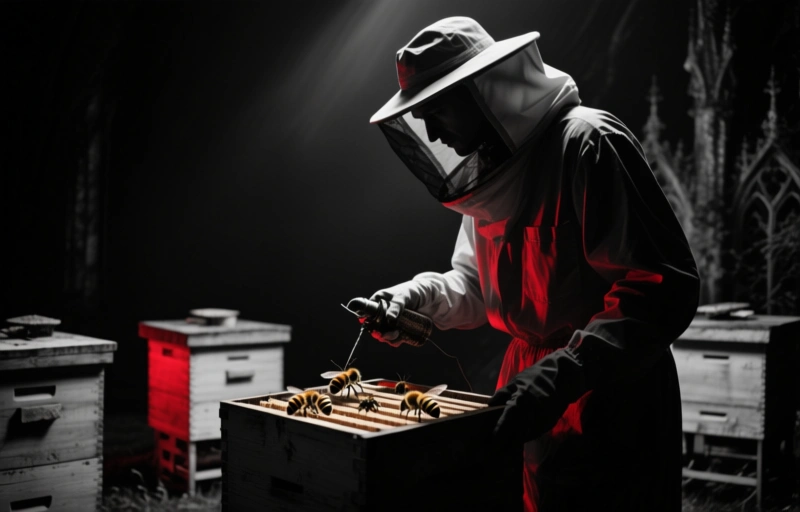
Protect your bee colonies from varroa mites, wax moths, and hive beetles. Learn to choose between organic and synthetic treatments, master timing, and build an effective pest management strategy for healthier hives.
Keeping a healthy bee colony isn't just a hobby, it's a responsibility. You're managing a whole little world in that wooden box. And just like any world, it faces threats. The big ones? Varroa mites, wax moths, and small hive beetles. They're the usual suspects that can turn a thriving hive into a struggling one almost overnight.
That's why having a solid pest control strategy isn't optional—it's essential. But here's the tricky part. It's not just about buying a product and spraying it in. It's a careful balancing act. You need to protect your bees without harming them or contaminating your precious honey harvest.
### Understanding Your Pest Control Options
So, what's in your toolkit? Broadly, you've got two paths: organic and synthetic.
Organic options are things like formic acid pads or essential oil blends. Many beekeepers love these because they feel more natural. They can be very effective when used correctly, especially against varroa mites. But timing is everything with organics. Apply them wrong, and you might not get the results you need, or worse, stress your colony.
Then there are synthetic miticides. These are lab-made treatments designed for maximum pest knockdown. They're powerful, but that power comes with a need for precision. You must follow the label to the letter—application rates, temperature windows, and pre-harvest intervals (that's the time you must wait before taking honey).
It reminds me of a conversation I had with a veteran beekeeper last season. He said something that stuck with me:
> "Choosing a treatment is like choosing a partner for your bees. It has to work with them, not against them. The goal is a healthy hive, not just a dead mite."
He's absolutely right. The product is just one piece of the puzzle.
### The Real Key: Knowledge and Timing
This is where so many folks, even experienced ones, can stumble. You can buy the best product on the market, but if you use it at the wrong time or in the wrong way, it's practically useless. Maybe even harmful.
Varroa mites, for example, have life cycles. Treating when they're most vulnerable makes your treatment far more effective. Small hive beetles love moisture and shade. Managing your hive's environment can be a huge part of controlling them before you even reach for a treatment.
That's why education is your most powerful tool. Understanding the 'why' behind the 'what' changes everything. It turns a chore into a strategy.
### Building Your Integrated Pest Management Plan
Don't just think about killing pests. Think about making your hive an unwelcoming place for them in the first place. This integrated approach is what separates good beekeepers from great ones.
- **Monitor relentlessly.** Use sticky boards or alcohol washes to check your varroa mite levels regularly. Don't guess.
- **Practice good hive hygiene.** Keep your equipment clean and your apiary tidy. Remove burr comb and debris that can harbor pests.
- **Use resistant stock when possible.** Some bee strains show better natural tolerance to mites and diseases.
- **Rotate treatments.** Pests can build resistance. Don't use the same chemical class year after year.
- **Always read the label.** Twice. It's not just fine print; it's the instruction manual for your hive's safety.
Ultimately, protecting your bees is about informed stewardship. It's comparing your options, understanding the trade-offs, and committing to a plan that's tailored for your specific hives and your local conditions. Whether you're safeguarding a few backyard hives or managing a large apiary, that principle remains the same. Success hinges on that careful, knowledgeable approach. It's how you build colonies that aren't just surviving, but truly thriving.
Related: afkickklinieken vergelijken.