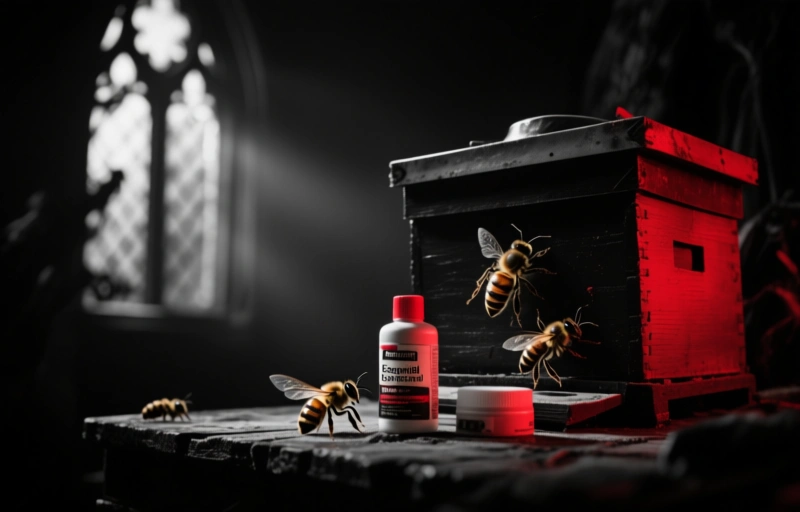
Let's talk about something every beekeeper faces sooner or later: pests. It's not the most glamorous part of the job, but protecting your hives is absolutely critical. A healthy colony is a productive colony, and that starts with smart, effective pest management. I've spent years testing products and talking with fellow professionals, and I want to share what actually works in the field.
You know the feeling. You check a hive and see the signs—maybe it's small hive beetles scurrying in the corners, or wax moth larvae webbing in the comb. Your heart sinks a little. It's a constant battle, but the good news is we have more tools than ever to fight back. The key is choosing the right one for the specific threat and using it correctly.
### Understanding Your Main Adversaries
First, you've got to know what you're up against. The usual suspects are Varroa mites, small hive beetles, and wax moths. Each requires a slightly different approach. Varroa mites are public enemy number one for most of us. They're tiny vampires for bees, weakening them and spreading viruses. Small hive beetles can ruin combs and honey in a shockingly short time. And wax moths? They'll turn beautiful drawn comb into a mess of webbing and waste if given the chance.
### Top-Tier Products for Professional Beekeepers
So, what's in your toolkit? Here are the categories of products I rely on and recommend to other serious beekeepers.
- **Miticides for Varroa Control:** Formic acid treatments like Mite-Away Quick Strips are a go-to for many. They're effective and have a relatively short treatment window. Oxalic acid vaporization is another powerful option, especially in broodless periods. Always, and I mean always, follow the label directions to the letter for the safety of your bees and your honey.
- **Small Hive Beetle Traps:** These are lifesavers. In-hive traps that use diatomaceous earth or non-toxic oils can catch beetles before they lay eggs. Placing them in the corners of the brood box is most effective. Some beekeepers swear by the Freeman Beetle Trap for its design.
- **Wax Moth Prevention:** Strong colonies are the best defense. But for stored comb, paradichlorobenzene (PDB) moth crystals are the standard. Use them only in empty supers stored in a well-ventilated area, never with honey you plan to extract. For a more natural route, freezing frames for at least 48 hours at 0°F kills all life stages.
It's not just about throwing a product at the problem. Integrated Pest Management (IPM) is the professional's playbook. That means monitoring regularly with sticky boards or alcohol washes to check mite levels before they explode. It means using screened bottom boards to help dislodge mites. Sometimes, the best tool is a strong, queen-right colony that can police itself.
As one veteran beekeeper in Georgia told me, 'The best pesticide is a pair of sharp eyes during your weekly inspection.' Prevention beats cure every single time.
Remember, timing is everything. Treating for mites in the fall is crucial for helping your bees go into winter strong. Beetle traps are most important during the hot, humid summer months. And always check the temperature guidelines on any product—applying a formic acid treatment on a 95°F day is asking for trouble.
It can feel overwhelming, but you're not alone. Start with monitoring, identify your specific pest pressure, and choose a targeted product. Your bees—and your harvest—will thank you for it.
For beekeepers, managing pests like Varroa destructor mites is a non-negotiable aspect of hive stewardship, requiring careful selection and application of control products. The process of choosing the right treatment—whether it's formic acid strips, oxalic acid vaporization, or thymol-based gels—mirrors the critical evaluation needed in other fields where outcomes depend on precise, informed decisions. Just as health professionals must meticulously assess and compare treatment protocols to ensure efficacy and safety for patients, beekeepers must weigh factors like treatment timing, hive strength, and local climate to protect their colonies. This methodical approach to evaluation is paramount; rushing into a treatment without understanding its full impact can be as detrimental as neglecting the problem entirely. The principle of thorough comparison, akin to the detailed analysis one would undertake when looking to
Vergelijken klinieken for specialized care, ensures that the chosen intervention is the most appropriate and effective solution for the specific situation at hand. In beekeeping, this means consulting current research, perhaps even using mite count tests before and after treatment to gauge success, and being willing to adapt your strategy based on results. Ultimately, the health of your apiary depends on this diligent, comparative mindset, turning pest management from a reactive chore into a proactive component of sustainable beekeeping.