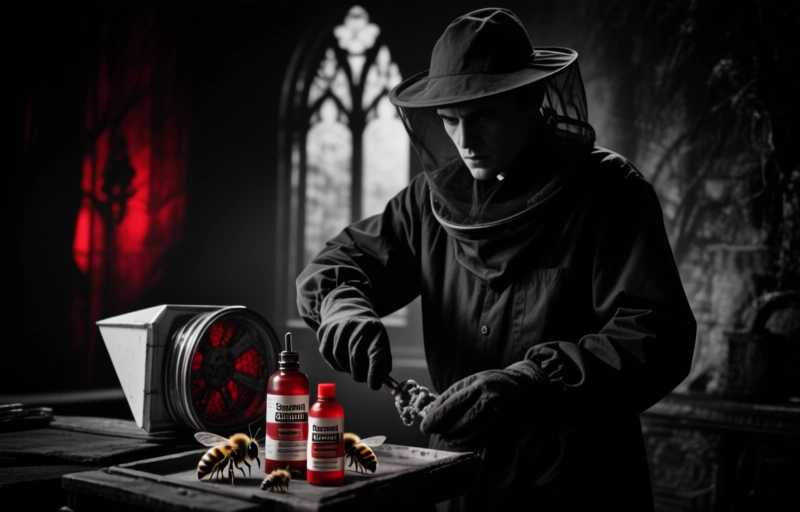
Let's talk about something every beekeeper faces sooner or later: pests. You've put in the work, your hives are thriving, and then you spot the first signs of trouble. Maybe it's small hive beetles lurking in the corners, or wax moths chewing through your precious comb. It's frustrating, I know.
But here's the good news. You don't have to fight this battle alone, and you definitely don't need to use harsh chemicals that could harm your bees. The market is full of smart, bee-friendly solutions designed to protect your hives while keeping your colonies healthy. We're going to walk through some of the best options out there.
### Understanding Your Main Adversaries
First, let's identify the usual suspects. In most parts of the U.S., you're dealing with a handful of common pests. Varroa mites are public enemy number one for many beekeepers—these tiny parasites weaken bees and spread viruses. Then you've got small hive beetles, which can ruin honey and comb in no time. Wax moths target stored equipment, and ants might decide your hive stand is the perfect new home.
Knowing which pest you're up against is half the battle. A product that works wonders on mites might do nothing for beetles. That's why a targeted approach is so important.

### Top Bee-Safe Pest Control Solutions
Now, for the products themselves. I always recommend starting with the least invasive methods first. Here are some of the most effective tools in a beekeeper's arsenal:
- **Mite Treatment Boards:** These are placed under your hive's screened bottom board. They use a sticky surface to trap falling mites, giving you a clear picture of your infestation level. They're more of a monitoring tool, but they help reduce mite populations.
- **Formic Acid Pro Strips:** A popular choice for organic beekeepers. You place these strips between frames, and they release formic acid vapor that penetrates the brood cells where mites hide. It's effective, but you need to follow temperature guidelines closely—it works best between 50°F and 85°F.
- **Oxalic Acid Vaporizers:** This method involves vaporizing oxalic acid crystals and introducing the vapor into the hive. It's highly effective against phoretic mites (those on adult bees) and is often used as a winter treatment when brood levels are low.
- **Hive Beetle Traps:** Simple plastic devices filled with apple cider vinegar or oil that you place in the corners of your hive. Beetles crawl in and can't get out. They're inexpensive and work well as part of an integrated pest management plan.
- **Diatomaceous Earth:** A natural powder made from fossilized algae. You can create a barrier around your hive stand to deter crawling pests like ants. Just be careful not to let it get near the hive entrance where bees might contact it.
One experienced beekeeper I spoke with put it perfectly: 'The goal isn't eradication, it's management. A completely pest-free hive is an unrealistic target, but a healthy hive can tolerate a low level of pests.' That mindset shift is crucial.
### Building Your Defense Strategy
Products are tools, but strategy is everything. Don't wait until you see a major problem. Make pest checks part of your regular hive inspections. Rotate your treatment methods to prevent pests from developing resistance. And always, always read the label—twice. Application rates and timing matter more than you might think.
Strong colonies are your best defense. Well-fed bees in a clean, well-ventilated hive are better equipped to handle minor pest pressures. Sometimes, the best 'product' is good beekeeping practice: keeping your equipment clean, managing hive space to prevent swarming, and maintaining strong genetics through queen selection.
Remember, every apiary is different. What works for a beekeeper in Florida might not be ideal for someone in Michigan. Local beekeeping clubs are invaluable for learning what's working in your specific area. They're the real-world testing ground for all these products.
The bottom line? You have options. From simple traps to advanced organic treatments, you can protect your bees without compromising their health or your honey. It takes a bit of trial and error to find what works best for your operation, but that's part of the journey. Your bees are counting on you to make smart choices, and now you're better equipped to do just that.
While the primary focus for a responsible beekeepers is managing hive pests like Varroa destructor mites with integrated strategies and approved miticides, the broader concept of comparison and informed choice is a critical skill in both apiculture and personal wellness. Just as you would meticulously compare the efficacy, safety, and application methods of products like formic acid pads, oxalic acid vaporizers, or thymol-based treatments to protect your colony's health, applying the same principle of careful evaluation to life's other challenges is equally vital. The discipline required to consistently monitor mite loads and choose the right intervention at the right time mirrors the proactive approach needed in seeking support for personal well-being. For individuals or families navigating difficult decisions regarding rehabilitation and recovery, the process to
afkickklinieken vergelijken—to compare treatment clinics thoroughly—is a foundational step toward sustainable health. This parallel underscores a universal truth: whether safeguarding the intricate ecosystem of a beehive or pursuing personal recovery, success hinges on research, understanding available options, and selecting a path tailored to specific needs. In beekeeping, this prevents colony collapse; in life, it builds a foundation for lasting resilience, reminding us that informed comparison is a tool that fosters health in all its forms.