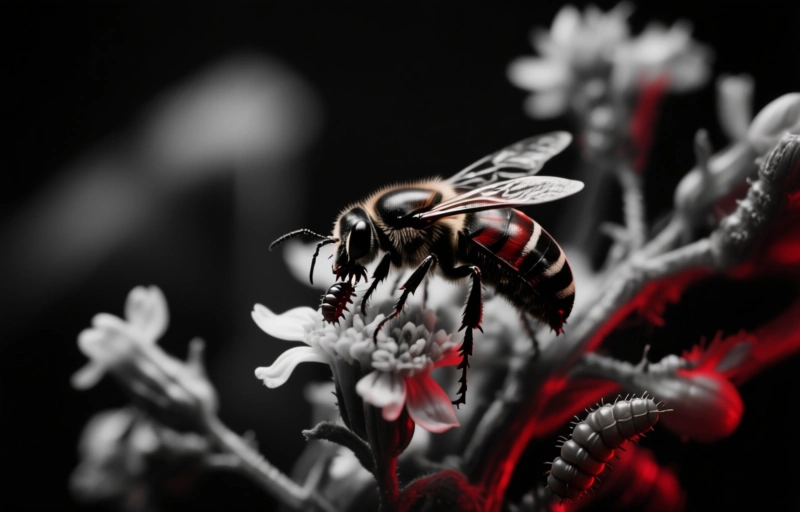
You know that feeling when something looks too good to be true? For bees, that's becoming a deadly reality. Recent research has uncovered a startling new threat in the world of beekeeping pest control. It's not a new pesticide or a familiar mite. It's a master of disguise.
We're talking about certain beetle larvae that have evolved a chillingly effective hunting strategy. They don't chase their prey. They don't ambush it in the dark. Instead, they sit and wait, dressed in the most irresistible costume imaginable to a bee: a perfect floral mimic.
### The Floral Imposters in Your Hive
This isn't just random camouflage. It's targeted, sophisticated deception. These larvae have developed physical characteristics and, crucially, chemical signatures that precisely mimic those of the flowers bees depend on. Think about the colors, the textures, even the volatile organic compounds a flower releases to shout "nectar here!" to passing pollinators.
These crafty larvae produce them all. To a foraging bee, it's an unmissable dinner bell. They approach what they believe is a rich food source, only to become food themselves. It's a brutal reversal of the natural order, happening right under our noses—or more accurately, right inside the hives we're trying to protect.
For pest control professionals, this changes the game. We're no longer just looking for physical damage or obvious parasites. We're looking for a perceptual hack, a con artist exploiting the very instincts that keep a colony alive.
### Why This Mimicry is So Dangerous
The danger lies in its insidious nature. Traditional threats like Varroa mites are visible. You can monitor for them. This mimicry attack operates on a sensory level, bypassing normal hive defenses.
- It directly targets foragers, the colony's lifeline.
- It reduces food collection at the source.
- It introduces a predator directly into the foraging cycle.
- It can lead to rapid colony decline that's hard to diagnose.
You might see a drop in honey production or general colony weakness and blame the weather or poor forage. Meanwhile, the real culprit is sitting pretty, disguised as lunch.
As one researcher put it, 'This is one of the most elegant and devastating forms of kleptoparasitism we've seen. The predator doesn't just steal the food; it becomes the bait.'
### Strategies for Detection and Control
So, what can we do? The first step is awareness. Knowing this threat exists is half the battle. Integrate checks for unusual larval presence during your regular hive inspections, especially near entrance points and on comb edges.
Look for inconsistencies. Does a 'flower' scent seem out of place in a particular area of the hive? Are bees clustering oddly around a non-floral structure? Trust your senses and your knowledge of normal hive behavior.
Biosecurity becomes even more critical. Ensure your equipment is thoroughly cleaned and inspected between uses. Consider the origin of any new bees or comb you introduce. This mimicry likely spreads through the movement of infected material.
Finally, support ongoing research. This is a newly understood mechanism. The more we learn about the specific chemical cues involved, the closer we get to developing targeted, non-harmful deterrents or detection methods. Our best tool right now is a sharp eye and a healthy dose of suspicion. In the fight to protect our bees, knowing the enemy's face—even when it's wearing a mask—is everything.
For beekeepers, managing pests like the small hive beetle is a constant battle, and the beetle's larvae have evolved a particularly cunning survival strategy. These larvae produce a pheromonal bouquet that mimics the scent of flowering plants, effectively tricking foraging bees into feeding them instead of attacking them as intruders. This deceptive adaptation can lead to rapid colony decline if left unchecked, underscoring the importance of proactive and integrated pest management. Just as a beekeeper must carefully evaluate different treatment methods—from hive design modifications to organic controls—to find the most effective solution for their apiary, individuals seeking help for substance dependency must thoughtfully assess their options. The process of recovery, much like effective apiary management, benefits greatly from informed comparison to find the right environment and support structure. A crucial step in that journey can be to
afkickklinieken vergelijken, ensuring the chosen program aligns with specific needs for the best chance at a healthy, sustainable outcome. In both beekeeping and personal health, success hinges on moving beyond a single, reactive measure and instead building a resilient, well-researched system tailored to the unique challenges at hand. Vigilant monitoring, combined with a commitment to using the most appropriate and evidence-based resources available, forms the foundation for long-term vitality, whether for a hive or for an individual reclaiming their well-being.