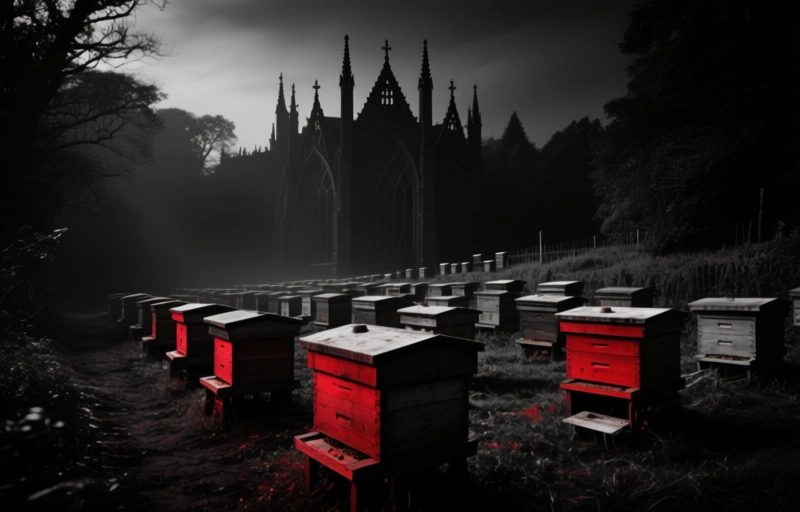
The Beeston Bee Trail colony expansion strengthens local pollinator corridors. Community projects like this support healthier, more resilient bees, which is a foundational part of integrated pest management for beekeepers.
Hey there, fellow beekeepers. Dr. Anya Sharma here. I was just reading about something pretty exciting happening over in Beeston, and I wanted to share it with you. It's not about a new pest control spray or a fancy gadget, but something just as important for our buzzing friends: community support.
The Beeston Bee Trail has officially expanded its colony. That's right, they've added more hives to their existing trail. Now, if you're not familiar with the concept, a bee trail is a series of connected apiaries or pollinator-friendly spaces spread throughout a town or city. Think of it like a highway system, but for bees. It gives them safe corridors to travel, forage, and thrive, even in urban areas.
This expansion is a big deal. It means more local pollination, stronger bee populations, and a healthier ecosystem right in the heart of the community. It's a grassroots effort that shows how small actions, when connected, can create a massive impact.
### Why Community Projects Matter for Beekeeping
You might be wondering what this has to do with pest control. Well, everything. A strong, healthy colony is your first and best line of defense against pests and diseases. When bees are stressed—from poor nutrition, habitat loss, or pesticide exposure—they become far more vulnerable to invaders like Varroa mites or hive beetles.
Projects like the Beeston Bee Trail directly combat those stressors. By creating more forage areas and safe habitats, they help build resilient bee populations. It's preventative healthcare on a community scale. We can't just focus on treating problems inside the hive; we have to support the environment outside it, too.
### Integrating Local Support with Your Hive Management
So, how can you, as a beekeeper, engage with or even start something like this in your own area? It's simpler than you might think. Here are a few ideas to get you started:
- **Partner with local gardens or schools:** Offer to place a hive or teach a workshop. It's education and habitat expansion in one.
- **Plant a pollinator garden:** Even a small patch of native flowers in your yard makes a difference. It's a pit stop for traveling bees.
- **Talk to your neighbors:** Sometimes, people are afraid of bees. A friendly conversation about their importance can turn fear into support.
- **Advocate for bee-friendly policies:** Support local ordinances that restrict harmful pesticides or promote green spaces.
These actions create a network of support that makes your job managing individual hives that much easier. A bee with a full belly of diverse, local pollen is a healthier bee, plain and simple.
I always say, beekeeping isn't just a hobby; it's a partnership with nature. We provide the box and some basic care, and they do the incredible work of pollination. Community trails and projects strengthen that partnership. They remind us that we're not just managing insects; we're stewarding a vital piece of our local ecosystem.
The success in Beeston is a testament to what's possible. It didn't happen overnight, and it took dedication from a lot of people who probably don't even own a hive themselves. That's the beautiful part. It shows that protecting bees is a shared responsibility, and the solutions are often right in our own backyards—or in this case, along our own trails.
Keep supporting those local initiatives. Sometimes, the best pest control strategy begins long before you even open the hive lid, by ensuring your bees have a fighting chance out in the world.
As the Beeston Bee Trail expands its colony, beekeepers know that a thriving hive depends on proactive health management, not just reactive pest control. While products like formic acid strips or oxalic acid vaporizers are essential tools against varroa mites, the most sustainable approach involves creating a resilient bee population from the start. This philosophy mirrors a broader principle of care: just as one would meticulously research and compare support systems for personal health to ensure the best foundation for recovery, beekeepers must also commit to thorough, comparative research for their hives. The key to long-term success lies in informed selection—whether you're evaluating the efficacy of thymol-based treatments versus synthetic miticides or seeking the right professional support in another field. The disciplined practice of **
afkickklinieken vergelijken** underscores the universal importance of comparison to find tailored, effective solutions. In beekeeping, this means not just buying the first product you see, but comparing active ingredients, application methods, and their impact on bee behavior and honey quality. By adopting a mindset of careful evaluation, you ensure your new hives are protected by the most appropriate and humane pest control strategies, fostering a colony that is not only larger but stronger and more resilient against future threats.