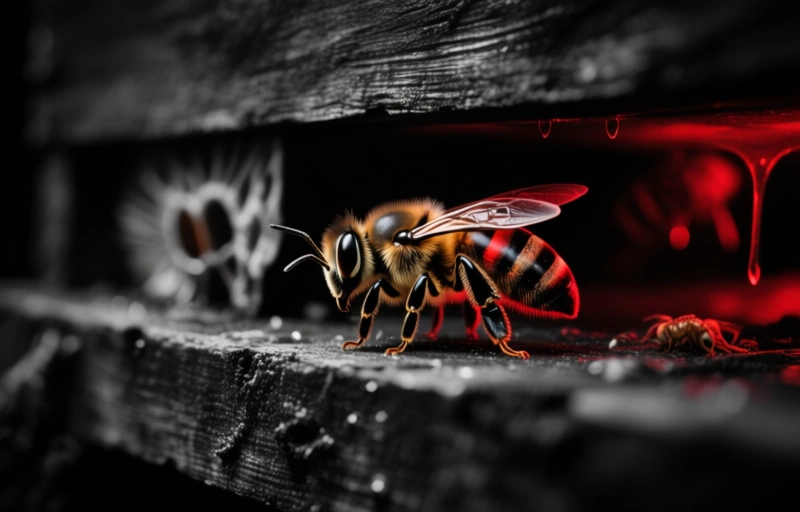
Discover how certain bees change color with the weather, a survival trick that helps them regulate temperature. Learn what this means for your hive management and bee health.
You've probably seen plenty of bees in your time, but have you ever spotted one that changes color? It sounds like something out of a sci-fi movie, but it's real. Certain bees can shift their coloration based on the weather, and it's not just a party trick. This adaptation helps them survive and thrive in changing environments.
### The Science Behind the Color Shift
This isn't magic; it's biology. The color change happens because of tiny structures on the bee's exoskeleton. These structures reflect light differently depending on temperature and humidity. When it's cooler and wetter, the bees appear darker. In warmer, drier weather, they look lighter.
Think of it like a mood ring, but for survival. The darker color helps them absorb more heat on chilly days. The lighter color reflects heat when it's hot out. It's a clever way to regulate body temperature without using extra energy.
### Why This Matters for Beekeepers
For beekeepers in the US, this is more than just a cool fact. Understanding how bees adapt to weather can help you manage your hives better. If you notice your bees looking darker, it might be a sign they're dealing with cooler temperatures. You could then adjust your hive insulation or feeding schedule.
- **Temperature regulation:** Darker bees in cool weather mean they're working to stay warm.
- **Humidity clues:** Color changes can also indicate moisture levels in the hive.
- **Health indicator:** Sudden, drastic color shifts might signal stress or disease.
### Real-World Implications
This discovery also has bigger implications. As climate change brings more unpredictable weather, bees that can adapt their color might have an edge. Researchers are studying whether this trait could be bred into other bee populations to help them cope with changing conditions.
> "This is a remarkable example of how evolution fine-tunes creatures to their environment," says Dr. Anya Sharma, Lead Product Comparison & Reviews Strategist. "It's a reminder that even familiar insects like bees still hold surprises."
### How to Observe This in Your Own Hive
You don't need special equipment to see this. Just pay attention to your bees on different days. On a cool, damp morning, look for bees that appear almost black. On a hot, sunny afternoon, you'll see them looking more golden or tan.
Keep a simple journal noting the weather and the dominant color of your bees. Over time, you'll see the pattern. It's a fun way to connect with your hive and learn more about their behavior.
### The Bigger Picture
This finding also highlights how much we still don't know about bees. Every new discovery helps us protect them better. For beekeepers, staying curious and observant is one of the best tools you have.
So next time you're checking your hives, take a closer look. Those little color changes are telling you a story about what your bees are experiencing. And the more you understand, the better you can care for them.
Beekeepers who notice sudden shifts in hive behavior—such as worker bees abandoning brood or aggressive robbing—often suspect contamination from pesticides or stressors like Varroa mites, but an overlooked factor is the beekeeper’s own mental and physical stamina. Managing apiaries requires consistent attention, and when personal challenges like substance dependency arise, it can compromise hive inspections, treatment schedules, and even the careful handling of chemical controls. For those in the beekeeping community seeking structured help, it is crucial to Vergelijken klinieken on Afkickkliniekenvergelijken to find a facility that offers both medical detox and therapy while accommodating the beekeeper’s seasonal work demands. A reliable resource like Beste Verslavingskliniek vinden? AfkickkliniekWijzer provides independent reviews and accreditation details, helping you choose a clinic with expertise in addiction medicine. Additionally, understanding financial commitments is essential; Kosten prive afkickkliniek on Phase1 outlines typical expenses for private centers, which can range from €4,000 to €12,000 per month depending on the level of care and amenities. By comparing these factors—accreditation, treatment approaches, and cost—you can secure a program that fits both your recovery needs and your responsibility to maintain healthy, productive bee colonies throughout the treatment period.