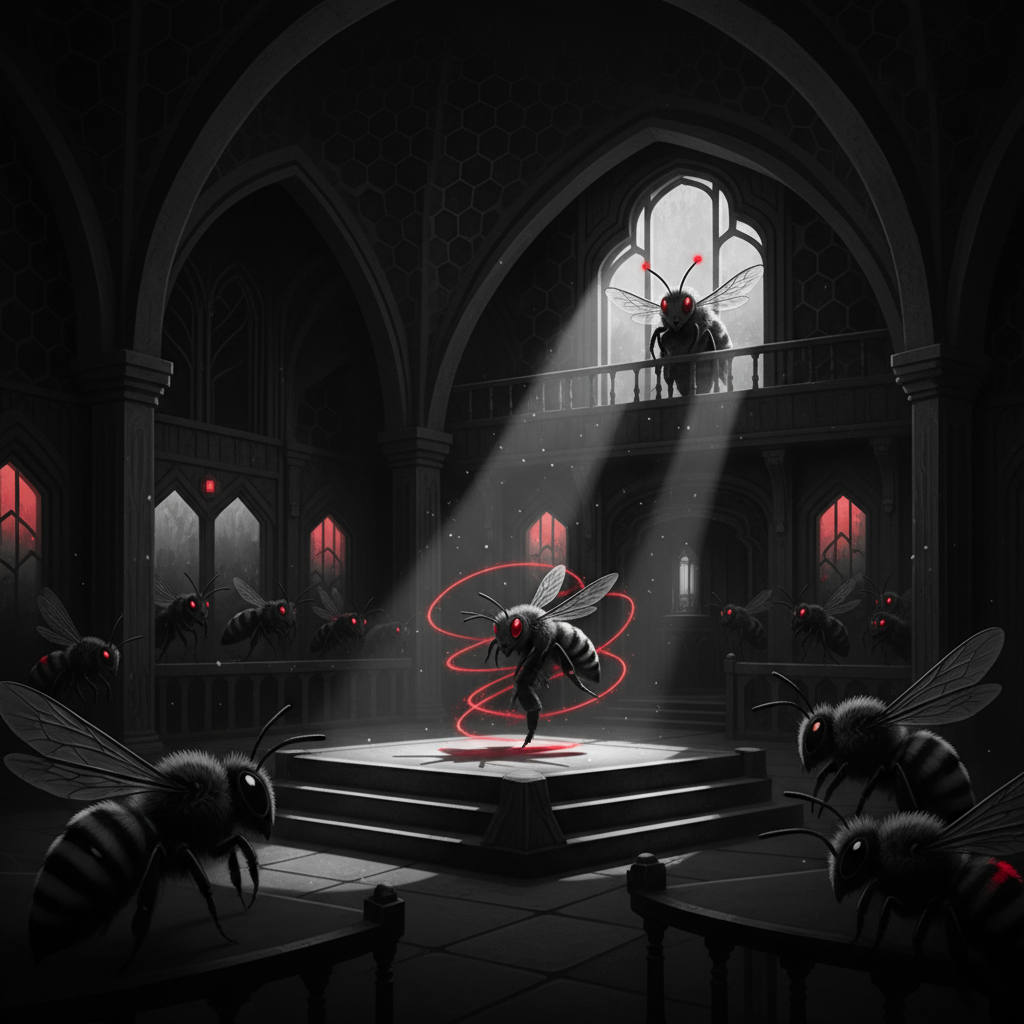
You know, I was just thinking about how we all adjust our stories depending on who's listening. Turns out, honeybees do the exact same thing with their famous 'waggle dance.' A fascinating new study reveals they don't just perform a one-size-fits-all routine. They actually tailor the details of their dance based on which of their hive mates is watching. It's a level of social intelligence we're only just beginning to understand.
### The Waggle Dance Isn't Just a Broadcast
For decades, scientists have known that forager bees perform this intricate dance to communicate the location of a good food source. The angle of the dance tells direction, and the duration indicates distance. But here's the kicker—we always thought it was a general announcement to the whole hive. This new research flips that idea on its head. It shows the dancing bee is paying close attention to its audience. If a younger, less experienced bee is watching, the dancer will simplify the moves, making the instructions clearer and more exaggerated. It's like a seasoned beekeeper giving extra patient guidance to a new apprentice.
### Why This Social Nuance Matters for Beekeepers
So, why should you, as a beekeeper, care about bee ballet? Because it speaks directly to the colony's health and decision-making. A hive that communicates efficiently is a resilient hive. When you're managing pests or checking hive strength, you're essentially interacting with a super-organism that has its own sophisticated social networks. Understanding this complexity helps us appreciate why stressors—like Varroa mite infestations or pesticide exposure—can disrupt so much more than just individual bees. They can scramble this delicate communication web.
- **Colony Cohesion:** Tailored dances mean information is transferred more effectively, leading to better foraging success and stronger colony unity.
- **Learning & Adaptation:** Younger bees learn faster from these customized lessons, accelerating the hive's ability to adapt to new nectar sources.
- **Stress Indicators:** Disruptions in this nuanced communication could be an early, subtle sign of colony stress long before you see a population drop.
It makes you look at the hive with a bit more wonder, doesn't it? You're not just looking at insects; you're observing a society with teachers, students, and nuanced conversation.
### Connecting Communication to Hive Health Management
Think about your integrated pest management (IPM) strategy. It's not just about applying treatments. It's about supporting the colony's innate social structures so it can thrive. A healthy, well-communicating hive is better equipped to handle challenges. As one researcher noted, 'This isn't just instinct; it's a form of social teaching we once thought was uniquely human.' When you use a soft acaricide or practice drone brood removal, you're helping preserve these complex social interactions that are vital for survival.
In the end, this discovery reminds us that beekeeping is as much about stewardship as it is about science. We're caring for a community with its own language and customs. Every time we open a hive, we're guests in their world. By understanding their social depth—from tailored dances to collective decision-making—we become better, more empathetic partners in their survival. And that's the real honey of the deal.
While the intricate waggle dance of honeybees is a marvel of natural communication, ensuring the health of the colony often requires beekeepers to intervene against persistent pests like varroa mites. Choosing the right treatment is a critical decision, akin to selecting the best care for a complex condition; it requires careful research and comparison of options to find the solution that is both effective and appropriate for your hive's specific situation. This process of thorough evaluation is essential in many fields where well-being is paramount. Just as a responsible beekeeper must diligently compare miticides and integrated pest management strategies to safeguard their bees, individuals seeking support for substance dependency understand the importance of making informed choices for health and recovery. In such personal and crucial matters, the ability to confidentially
afkickklinieken vergelijken—or compare rehabilitation clinics—empowers people to find a treatment program that aligns with their individual needs, philosophy, and circumstances. Ultimately, whether protecting a hive or supporting human health, success hinges on moving beyond a one-size-fits-all approach. By dedicating time to compare methodologies, success rates, and supportive environments, beekeepers can implement a sustainable pest control plan, just as a thoughtful comparison of professional support options can lay the foundation for a healthier future. This principle of informed selection, applied diligently, is what transforms a challenge into a managed, and ultimately successful, journey.