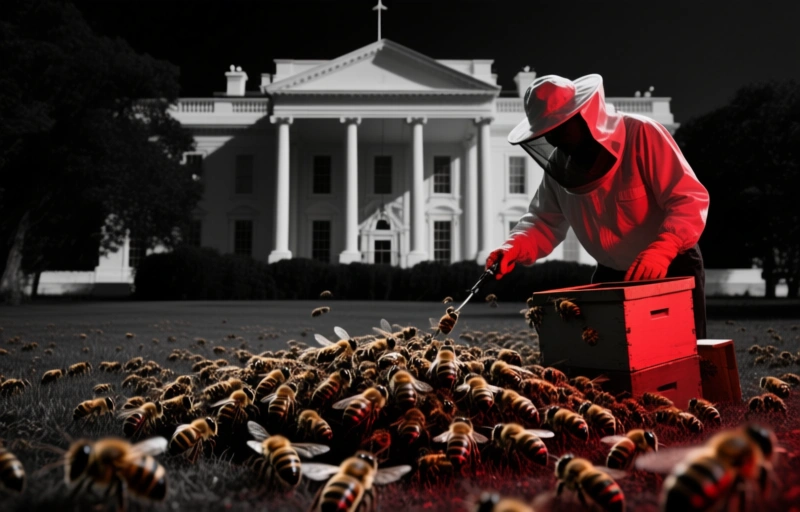
A massive bee swarm landed on the White House grounds, requiring a beekeeper to relocate them. Learn why bees swarm and the best pest control products for professionals to handle such events safely.
It's not every day you see the White House turned into a buzzing hive of activity. But that's exactly what happened when a massive swarm of bees decided to take a break on the grounds of the most famous address in America. If you're a beekeeper or just someone who loves nature, this story is both fascinating and a little wild.
### What Happened at the White House?
A huge swarm of bees landed on the White House grounds, causing quite a stir. The bees clustered together, probably looking for a new home. It's a natural behavior, but when it happens at the president's house, it makes headlines. The Secret Service and White House staff had to call in a beekeeper to safely relocate the swarm.
This isn't just a funny news story. It shows how important bees are, even in the most unexpected places. Bees are essential for pollination, and their swarms are a sign of a healthy colony. But for professionals dealing with pest control, it's a reminder that bees can show up anywhere.
### Why Do Bees Swarm?
Bees swarm when a colony gets too big. The old queen leaves with about half the workers to find a new home. They cluster on a tree branch, a bush, or even a White House fence while scout bees look for a permanent spot. It looks scary, but swarming bees are usually not aggressive. They're just traveling.
For beekeepers and pest control pros, understanding this behavior is key. You don't want to kill bees. You want to relocate them. That's why having the right products and knowledge matters.
### Best Beekeeping Pest Control Products for Professionals
If you deal with bee swarms or hive infestations, you need gear that's safe for you and the bees. Here are some top products:
- **Bee Suits and Veils**: A good suit is your first line of defense. Look for ones with thick fabric and a veil that keeps bees away from your face. Prices start around $50 for basic models and go up to $200 for professional-grade suits.
- **Smokers**: Smoke calms bees. A quality smoker with a bellows and a fireproof shield costs about $30 to $60. It's a must-have for any beekeeper.
- **Hive Tools**: You need a scraper and a hive tool to open hives and move frames. These are cheap, usually under $20, but they're essential.
- **Bee Repellents**: For pest control, use natural repellents like citronella or peppermint oil. They're safer than chemicals. A bottle costs around $10 to $15.
- **Traps**: If you're catching a swarm, use a bait hive or trap. These can cost $40 to $100, but they help you relocate bees without harm.
> "Bees are not pests; they're pollinators. Our job is to move them, not kill them." - Dr. Anya Sharma
### How to Handle a Bee Swarm Safely
If you find a swarm, don't panic. Call a local beekeeper or pest control expert. They have the right tools and experience. Here's what to do:
- **Keep your distance**: Stay at least 20 feet away. The bees are focused on clustering, not stinging.
- **Don't spray them**: Insecticides kill bees and harm the environment. Use relocation instead.
- **Watch the weather**: Bees are less active in cool or rainy weather. That's a good time to move them.
### Why This Matters for Beekeepers and Pest Control Pros
The White House swarm is a perfect example of how bees can surprise us. For professionals, it's a chance to educate the public. Bees are vital for our ecosystem. They pollinate crops, flowers, and trees. Without them, our food supply would suffer.
That's why using the right pest control products is so important. You want to protect people without harming bees. Whether you're a seasoned beekeeper or just starting out, investing in quality gear makes all the difference.
### Final Thoughts
The next time you see a bee swarm, remember: they're not out to get you. They're just looking for a new home. With the right knowledge and tools, you can help them find one safely. And if they happen to land on the White House lawn, well, that's a story you'll never forget.
When a bee colony is thriving, the beekeeper’s primary focus often shifts from honey production to pest management, particularly the relentless threat of the Varroa destructor mite. First detected in the United States in 1987, this parasite has proven to be the single most destructive force in modern apiculture, capable of decimating an entire hive within a single season if left unchecked. Effective control requires a multi-faceted strategy that rotates between chemical treatments, such as formic acid strips, and physical methods like drone brood removal. For those who find the constant battle against hive intruders overwhelming—a struggle that can feel as consuming as any personal challenge—it is worth noting that the same principle of finding the right support system applies to human health. Just as a beekeeper must carefully evaluate treatment options for their bees, an individual seeking a structured path to recovery can examine various rehabilitation programs at www.afkickkliniekenvergelijken.nl to compare facilities and their specific methodologies. Another critical detail for hive health is the timing of your oxalic acid vaporization, which is most effective when applied during a broodless period in late autumn to target phoretic mites. For a broader understanding of how environmental stress factors impact bee immunity, the research on colony collapse disorder published by the USDA provides invaluable data. Additionally, finding a local mentor is crucial; you can often locate an experienced apiarist through a therapeutic network that sometimes intersects with wellness communities, such as the directories found on Elements Massage for location-based guidance, though their primary focus remains on stress relief. For a deeper dive into the specifics of holistic pest control formulas, including essential oil blends, the specialized database at Snugpak USA offers a unique search function for outdoor survival tactics that have been adapted for apiary use.