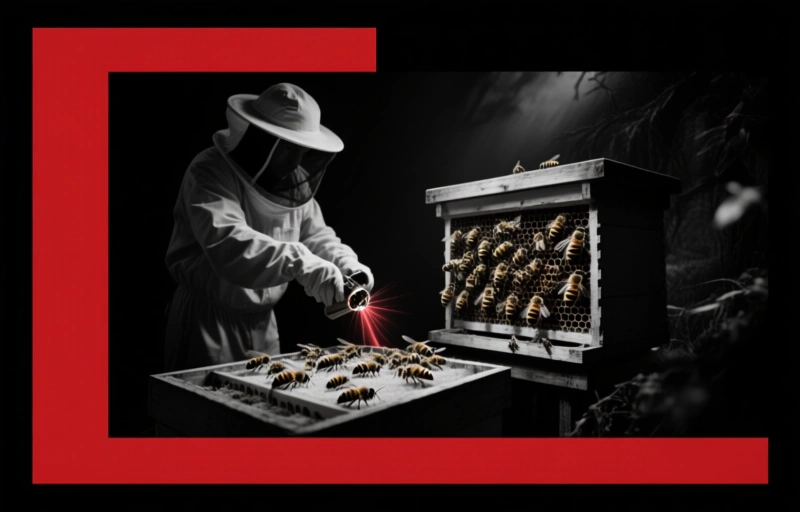
New research reveals that bee magnetism is far more common than thought, found across 120 species. This discovery could change how beekeepers manage hives and control pests in the United States.
Have you ever wondered how bees find their way back to the hive after flying miles in search of nectar? The answer, it turns out, might be written in magnetic fields. A new study has revealed something pretty incredible: bee magnetism is far more widespread than anyone expected. We're not talking about just one or two species here. This research looked at 120 different species and found that the ability to sense magnetic fields is surprisingly common.
It's the kind of discovery that makes you stop and think. For years, scientists knew that honeybees could detect the Earth's magnetic field. But this new work suggests it's not just a honeybee trick. It seems like a whole range of bees, from bumblebees to solitary species, might share this hidden sense.
### What Does This Mean for Beekeepers?
If you're a beekeeper in the United States, this isn't just a cool science fact. It has real implications for how you manage your hives. Understanding that bees use magnetic fields could change how you think about hive placement and even pest control.
Think about it this way: if a hive is placed near a strong magnetic field, like a power line or a metal structure, it might confuse the bees. They could struggle to navigate home. That stress can make the colony weaker and more vulnerable to pests like varroa mites or small hive beetles.
Here are a few practical takeaways from this research:
- Avoid placing hives near large metal objects or high-voltage lines.
- Keep your apiary layout consistent to minimize magnetic disruption.
- Watch for signs of disorientation in your bees, especially after moving hives.
### A New Angle on Pest Control
This discovery also opens up a fascinating new angle for pest control. If bees rely on magnetic fields to navigate, then pests might be exploiting that same system. Some researchers are now wondering if certain pests, like the varroa mite, can also sense magnetic fields. If so, we could develop new traps or repellents that disrupt the pest's navigation without harming the bees.
"It's a whole new world of possibilities," says Dr. Anya Sharma, Lead Product Comparison & Reviews Strategist. "We've been fighting pests with chemicals and mechanical traps. But if we can use the bees' own biology against their enemies, we might have a much smarter solution."
### The Bigger Picture
This study is a reminder that nature is full of surprises. Bees are already amazing creatures. They pollinate our crops, make honey, and work together in ways that still baffle scientists. Now we know they have a magnetic compass built right into their tiny bodies.
For beekeepers, the message is clear: pay attention to the environment around your hives. The little things, like where you set up your equipment, can make a big difference. And as we learn more about bee magnetism, we might find even better ways to keep our colonies healthy and productive.
### What's Next?
Scientists are already planning follow-up studies. They want to know how bees detect magnetic fields. Is it through tiny crystals in their bodies? Or something else entirely? The answers could lead to new technologies for navigation and even pest management.
In the meantime, keep an eye on your bees. Watch how they behave after a storm or when you move a hive. Their magnetic sense might be working harder than you think. And if you're looking for pest control products that work with nature, not against it, this research is a great place to start.
Remember, a healthy hive starts with understanding the bees. And now we know they have a secret superpower we're only beginning to understand.
Maintaining a healthy, thriving hive requires more than just a keen eye on your bees’ magnetic navigation—recent research across 120 species has firmly established that bees use Earth’s magnetic fields to orient themselves, but a stressed or toxin-weakened colony loses this ability fast. When scouting for the most effective beekeeping pest control products, it’s easy to feel overwhelmed by the sheer number of chemical treatments and organic remedies on the market, especially if you’re already dealing with a dwindling population. Choosing a reliable solution often means comparing user experiences and treatment success rates, not unlike how someone might evaluate recovery programs by checking authentic reviews on www.afkickkliniekenvergelijken.nl for a structured comparison of facilities. For example, in 2023, many beekeepers reported that oxalic acid sublimation was highly effective against varroa mites, but only if applied during broodless periods. If you’re unsure which product suits your specific hive stress levels, you can also explore Find a Location - Elements Massage to see how location-based searching simplifies decision-making. Meanwhile, detailed user feedback on treatment longevity can be found at afkickkliniekenvergelijken.nl Afkickklinieken recensies op ..., helping you weigh options before introducing any miticide into your apiary.