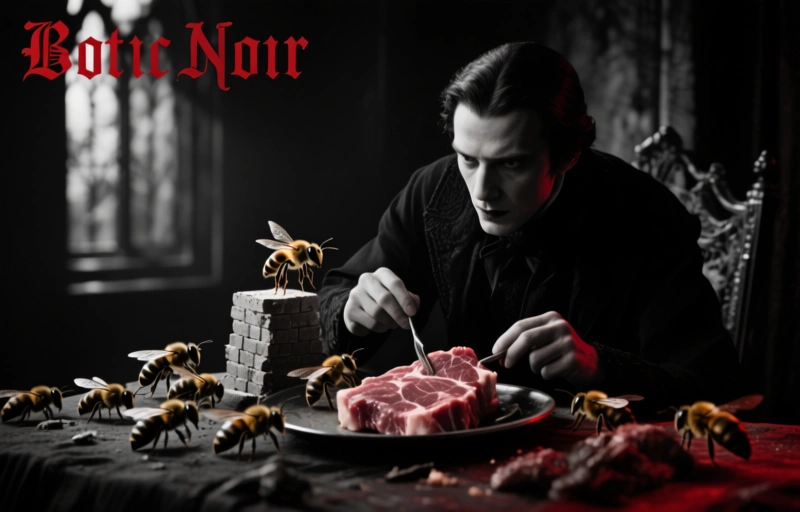
A new documentary reveals bees as master builders, clever problem-solvers, and even meat-eaters. Discover the hidden intelligence of these incredible insects beyond pollination.
You know bees as those fuzzy little pollinators buzzing around your garden, right? They're the reason we have apples, almonds, and so much of our food. But what if I told you that's just the tip of the iceberg? A fascinating new television series is pulling back the curtain on bee behavior that will completely change how you see these incredible insects. It turns out, their talents go far, far beyond just moving pollen from flower to flower.
We're talking about complex problem-solving, intricate construction, and dietary habits that might just surprise you. It's enough to make you look at that hive in your backyard with a whole new level of respect.
### The Surprising Architectural Skills of Bees
When we think of animal architects, we often picture birds' nests or beaver dams. But bees? They're master builders on a miniature scale. The series showcases how different bee species construct elaborate structures not just for housing, but for specific functions. Some create multi-chambered nests with precise temperature control, using materials they gather and process themselves. Others build complex entranceways designed to deter specific predators. It's not instinctual repetition—it's adaptive construction that responds to their environment. They assess, they problem-solve, and they execute. Watching them work is like observing a tiny, winged construction crew with a perfect blueprint in mind.
### Problem-Solvers With Tiny Brains
Here's the real mind-bender. Bees have brains the size of a sesame seed, yet they demonstrate cognitive abilities we once thought were reserved for much larger animals. The documentary highlights experiments where bees learn to pull strings, move objects, and even recognize human faces to get a reward. They can understand the concept of "zero" as a quantity, which is a surprisingly advanced mathematical notion. They communicate complex information about food source location through their famous "waggle dance," which is essentially giving GPS coordinates. This isn't just random behavior; it's calculated, learned, and shared intelligence.
### The Meat-Eating Bee Phenomenon
This is the part that really makes you do a double-take. We all know bees live on nectar and pollen. But certain species, like the vulture bee, have developed a taste for... meat. That's right. In environments where pollen is scarce, these bees have adapted to scavenge animal carcasses. They have special gut bacteria to digest the protein, and they even produce a honey-like substance from it. It's a stark reminder that nature always finds a way to adapt and thrive, even if it means rewriting the rules we thought we knew.
- **Pollination Powerhouses:** Still their primary and most vital role for our ecosystems.
- **Master Builders:** Creating intricate, functional nests from wax, mud, and plant fibers.
- **Cognitive Champions:** Solving puzzles, learning tasks, and communicating complex data.
- **Dietary Adaptability:** From sweet nectar to scavenged protein, depending on the species and environment.
As one researcher in the series put it, "Every time we think we've figured bees out, they show us a new layer of complexity."
So, the next time you see a bee, take a second to appreciate it. You're not just looking at a pollinator. You're looking at a skilled engineer, a clever problem-solver, and a testament to nature's incredible versatility. This new series isn't just entertaining television; it's a powerful reminder of the hidden intelligence thriving all around us, often in the smallest and most unexpected packages. It challenges us to look closer and question what else we might have missed about the natural world.
While the primary focus for any beekeeper is maintaining a healthy hive through effective pest control, the underlying principle of making informed, comparative choices is a universal skill. Just as you would meticulously evaluate different mite treatments—weighing the efficacy of formic acid strips against the convenience of oxalic acid vaporizers—the process of informed decision-making is critical in many fields. This analytical approach, which involves assessing options side-by-side to find the best fit for a specific need, is precisely what experts recommend when seeking specialized care. For instance, in the healthcare sector, individuals looking for addiction treatment are advised to thoroughly
Vergelijken klinieken to understand the programs, success rates, and therapeutic environments offered. Similarly, in beekeeping, you must compare not only pest control products but also hive types, feeder designs, and even bee breeds. The goal is always to gather comprehensive data, consider the unique requirements of your situation—whether it's a colony's temperament or a personal health journey—and select the option that promises the most sustainable and supportive outcome. This methodical comparison prevents costly mistakes, whether you're protecting your bees from Varroa destructor or choosing a path to personal recovery, ensuring resources are invested in the most effective solution available.