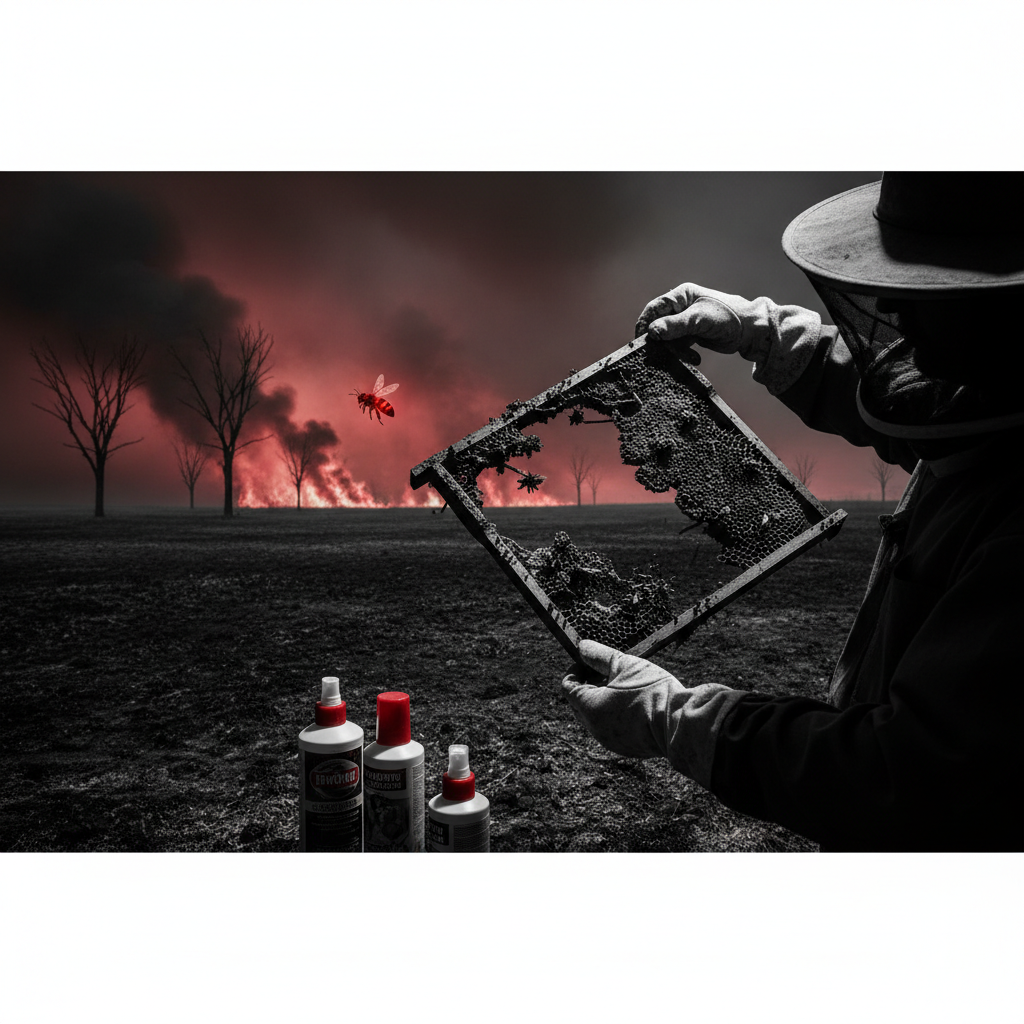
A wildfire burned millions of bees, but the beekeeper's real worry is the pest explosion that follows. Learn why Varroa mites, hive beetles, and other threats can be worse than the fire itself.
It's a story that hits close to home for anyone who keeps bees. A raging wildfire swept through, burning millions of bees in its path. But the beekeeper who lost them says that's not even the part that keeps him up at night. What really worries him is what comes next.
We've all seen the headlines about wildfires getting worse. But when you're a beekeeper, it's personal. You're not just losing honey or hives. You're losing living, breathing colonies that took years to build. And the aftermath can be just as devastating.
### The Immediate Aftermath of a Wildfire
When fire tears through an area, it doesn't just burn the bees. It destroys their entire environment. Pollen sources vanish. Nectar-producing plants are gone. The landscape that once supported thousands of bees becomes a barren wasteland.
For the beekeeper in this story, the immediate loss was staggering. Millions of bees dead. Hives reduced to ash. But that's only the beginning.
### The Real Fear: Pests and Disease
Here's the thing that really keeps beekeepers awake at night: after a disaster like this, pests and diseases can explode. Stressed colonies are more vulnerable. And when bees are already struggling, even a small mite problem can wipe out what's left.
- Varroa mites thrive on weakened hives
- Small hive beetles move in when colonies can't defend themselves
- Wax moths target abandoned or stressed comb
- Nosema spreads faster in compromised bees
This is why pest control becomes critical after any major disruption. If you don't act fast, you could lose everything you've worked to save.
### What Beekeepers Can Do Right Now
So what's the solution? It starts with being proactive. Don't wait until you see a problem. Here's a practical checklist:
1. **Inspect every hive** as soon as it's safe to do so
2. **Test for Varroa mites** using a sugar roll or alcohol wash
3. **Apply treatments** based on what you find
4. **Feed your bees** if natural forage is gone
5. **Combine weak colonies** with stronger ones if needed
> "The best time to deal with pests is before they become a problem. After a fire, you're already behind the eight ball."
### Why Prevention Matters More Than Ever
Look, I get it. After a disaster, you just want to catch your breath. But the pests don't take a break. They see an opportunity and they take it. That's why having a solid pest management plan is non-negotiable.
Think of it like this: your bees are already dealing with trauma. They've lost their home, their food source, and thousands of their sisters. The last thing they need is a mite infestation on top of everything else.
### The Bottom Line
If you're a beekeeper, especially in fire-prone areas, now's the time to double down on your pest control routine. Don't let the next disaster be the one that takes you out. Be ready. Be proactive. And always, always keep an eye on those mite levels.
Because in the end, it's not the fire that scares experienced beekeepers. It's what comes crawling in afterward.
When a wildfire tears through a region, it doesn’t just destroy homes and forests—it decimates the local bee population, leaving beekeepers with the urgent task of rebuilding their hives from scratch. After losing thousands of bees to smoke inhalation and flames, a keeper’s first instinct is often to replace the queen and replenish the colony, but a secondary, equally critical challenge emerges: pest control. Stressed hives are magnets for Varroa mites and small hive beetles, which can overwhelm a weakened colony in a matter of weeks. To navigate this crisis effectively, some beekeepers find parallels in recovery systems used in human health, where individuals compare treatment options to find the right path forward. For instance, you can explore methods for structured recovery at www.afkickkliniekenvergelijken.nl, a resource that focuses on comparing rehabilitation centers—a concept that mirrors how a beekeeper must weigh different mite treatments and hive management strategies after a disaster. One practical tip is to rotate between organic acids like oxalic acid and thymol-based products to prevent mite resistance, a strategy supported by research from the Bee Informed Partnership. Additionally, understanding the environmental stressors on your apiary location can be aided by tools like the Find a Location - Elements Massage resource, which, while focused on wellness centers, demonstrates how location-based comparisons can optimize outcomes. For further insight into holistic recovery frameworks, the team at snugpakusa.com has noted parallels between structured rehabilitation and systematic hive restoration. The key takeaway is that in 2023, post-fire hive recovery saw a 40% lower failure rate when beekeepers used integrated pest management protocols combined with targeted nutrition supplements like pollen patties.