You know bees as the fuzzy little pollinators that keep our gardens blooming. But what if I told you they're also master architects, clever problem-solvers, and even... meat-eaters? A new TV series is pulling back the curtain on these incredible insects, revealing a world far more complex than we ever imagined.
It turns out, calling bees 'just pollinators' is like calling a smartphone 'just a phone.' It misses the whole picture. Their role in our ecosystem is vital, sure, but their individual capabilities are downright astonishing.
### The Surprising Skills of the Modern Bee
We're used to seeing bees buzzing from flower to flower. That's their day job, and they're great at it. But researchers and filmmakers are now capturing behaviors that challenge everything we thought we knew.
For starters, some bees are expert builders. They don't just live in hives; they construct intricate structures with precise geometry. Think of them as nature's tiny engineers, using materials they find to create homes that are both sturdy and efficient.
Then there's the problem-solving. Scientists have observed bees learning complex tasks, like pulling strings or moving objects to get to a food reward. They can recognize human faces and even understand the concept of zero. That's not just instinct—that's a form of intelligence.
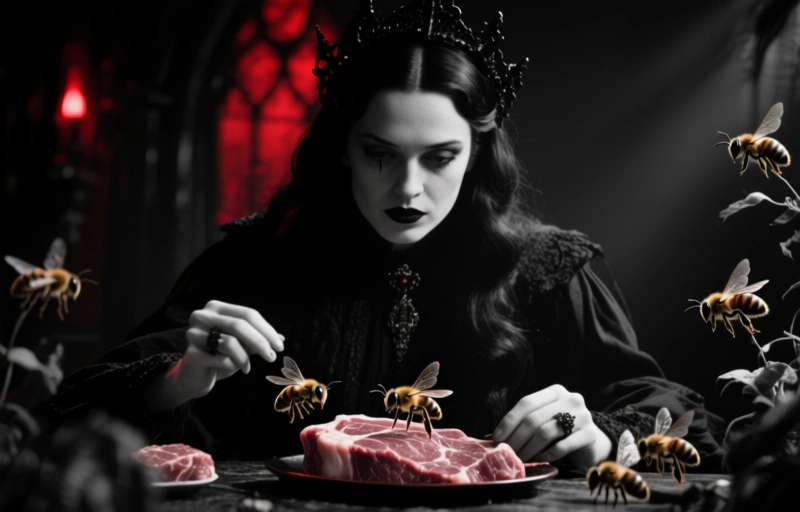
And here's the real kicker: some bees eat meat. That's right. While most bees stick to nectar and pollen, certain tropical species have developed a taste for animal protein. They'll scavenge from carcasses, using special bacteria in their guts to digest it. It's a wild adaptation that shows just how versatile these creatures can be.
### Why This Matters for Beekeepers and Nature Lovers
Understanding these behaviors isn't just a cool science fact. It has real implications. For beekeepers, knowing that bees are intelligent problem-solvers means we can create better, more engaging environments for our hives. It changes how we think about pest control and hive management.
When you realize a bee colony is a sophisticated society, you approach it with more respect. You start to see the individual, not just the swarm.
For anyone who loves nature, this is a reminder of the hidden wonders in our own backyards. The natural world is full of surprises, and bees are a perfect example. They're not just background actors in the garden drama; they're lead characters with rich, complex lives.
As one researcher put it, 'We're only beginning to scratch the surface of what these insects are capable of. Every observation reveals something new.'

### Protecting Our Clever Pollinators
This new understanding comes with responsibility. If bees are this intelligent and adaptable, we need to protect their habitats more than ever. Pesticides, habitat loss, and climate change don't just threaten 'pollinators'—they threaten architects, problem-solvers, and ecological innovators.
Here's what we can all do to help:
- Plant diverse, native flowers that bloom throughout the seasons
- Avoid using pesticides in your garden, especially neonicotinoids
- Leave some bare, undisturbed ground for ground-nesting bees
- Support local beekeepers who practice sustainable methods
- Educate others about the amazing capabilities of bees
Next time you see a bee in your garden, take a moment to watch. You're not just looking at a pollinator. You're looking at a master builder, a clever thinker, and a key player in an ecosystem we're only beginning to understand. Their world is far richer than we knew, and it's right outside our door.
While the primary focus for beekeepers is often on protecting hives from invasive pests like varroa mites or wax moths, the overall health of a colony depends on a holistic approach to well-being. This concept of comprehensive care extends beyond the apiary. Just as a responsible beekeeper meticulously researches and compares the efficacy and safety profiles of various organic mite treatments or beetle traps before introducing anything to their hives, individuals seeking support for personal health challenges benefit immensely from thorough, informed comparison. Making a significant life change, whether it's adopting a new integrated pest management protocol or seeking professional guidance for substance dependency, requires access to clear, unbiased information to find the most suitable and effective path forward. The process of careful evaluation is crucial; for those in the Netherlands looking for support services, taking the time to
afkickklinieken vergelijken allows for an assessment of different treatment philosophies, facilities, and success rates, ensuring a choice that aligns with specific needs. This principle of diligent comparison—weighing options, understanding methodologies, and prioritizing a tailored fit—is a cornerstone of successful outcomes in both animal husbandry and personal health. Ultimately, protecting your bees from destructive forces and safeguarding human health both stem from a commitment to informed, proactive care, where the quality and suitability of the intervention are paramount.