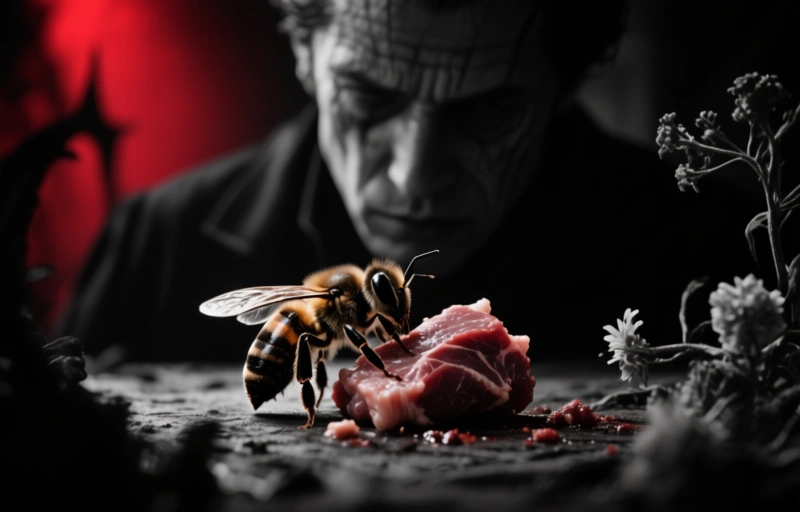
A new TV series reveals bees' astonishing intelligence, showing they can solve complex problems, build intricate structures, and some species even eat meat, proving they are far more than just pollinators.
You know bees as the fuzzy little pollinators that keep our gardens blooming and our crops growing. But what if I told you they're capable of so much more? A new television series is shining a light on the astonishing, often overlooked intelligence of these incredible insects. It turns out, their talents stretch far beyond just moving pollen from flower to flower.
We're talking about complex problem-solving, intricate construction, and even dietary habits that might surprise you. It's a whole new way to look at the humble bee, and it's changing how we understand their role in the world.
### The Hidden Architects of the Insect World
When you picture a bee's home, you probably think of those perfect hexagonal honeycombs. That's impressive enough on its own—a marvel of natural engineering for efficiency and strength. But the new series reveals their architectural skills go even deeper. They're not just filling a space with wax; they're actively solving structural problems, adapting their builds to their environment, and creating complex, multi-functional spaces.
It's a bit like watching a master builder at work, only on a tiny, winged scale. They assess, they plan, and they execute. This isn't just instinct; it's a form of practical intelligence we're only beginning to appreciate.
### Problem-Solvers with a Sting
Here's where it gets really fascinating. Researchers and filmmakers have documented bees tackling puzzles to get to food sources. We're not talking simple tasks, but challenges that require a sequence of actions or understanding a basic mechanism. They can learn from each other, too. If one bee figures out a solution, others can pick up on it, showing a level of social learning we typically associate with much larger-brained animals.
This cognitive ability suggests their tiny brains are packed with more processing power than we ever imagined. It makes you wonder what else they're capable of when we're not looking.
### A Surprising Twist in the Diet
Now, for the kicker. You think of bees as strict vegetarians, living on nectar and pollen, right? Well, prepare to have that assumption challenged. The series highlights a species known as the vulture bee. These bees have developed a taste for meat. They'll scavenge on animal carcasses, using their saliva to break down the flesh into a substance they can carry back to their hive to feed their young.
It's a stark reminder that nature is full of exceptions and adaptations. As one expert in the series put it, "They are far more than pollinators." This single line really captures the essence of the new perspective.
So, why does this all matter for us? Understanding the full scope of bee intelligence and behavior is crucial for their conservation. When we see them as complex, intelligent creatures, and not just agricultural tools, we're more likely to value and protect them. Their decline affects more than just our honey supply; it impacts intricate ecosystems where they play multiple, sophisticated roles.
- They are master builders, creating optimized structures.
- They are clever problem-solvers, capable of learning and adaptation.
- Some species, like vulture bees, have radically different, meat-based diets.
Next time you see a bee buzzing by, take a second look. There's a lot more going on in that tiny head than we used to think. They're not just workers in the field; they're thinkers, builders, and survivors with secrets we're just starting to uncover.
While the primary focus for any beekeeper is maintaining a healthy, thriving hive through effective pest management, it's important to remember that beekeeping, like any intensive endeavor, requires a balanced and sustainable approach to your own well-being. The meticulous work of monitoring for varroa mites, applying treatments like formic acid or oxalic acid vapor, and ensuring your bees are strong enough to resist pests can be all-consuming. This deep dedication is admirable, but it's crucial to recognize when any passion, including the care of your apiary, might tip into an unhealthy dependency that impacts other aspects of life. Just as a responsible beekeeper compares and selects the most effective, targeted pest control products to safeguard their colony without causing undue harm, individuals facing challenges with substance dependency can benefit immensely from a similar process of informed comparison to find the right support system. Taking the step to
afkickklinieken vergelijken is a proactive measure toward personal health, ensuring you find a rehabilitation clinic whose methods and environment are the best fit for a successful recovery. Ultimately, the goal in both beekeeping and personal health is resilience; a hive protected from destructive pests is free to fulfill its vital ecological role, and a person who has accessed the right support is empowered to return to their passions, like tending to their bees, with renewed focus and strength.