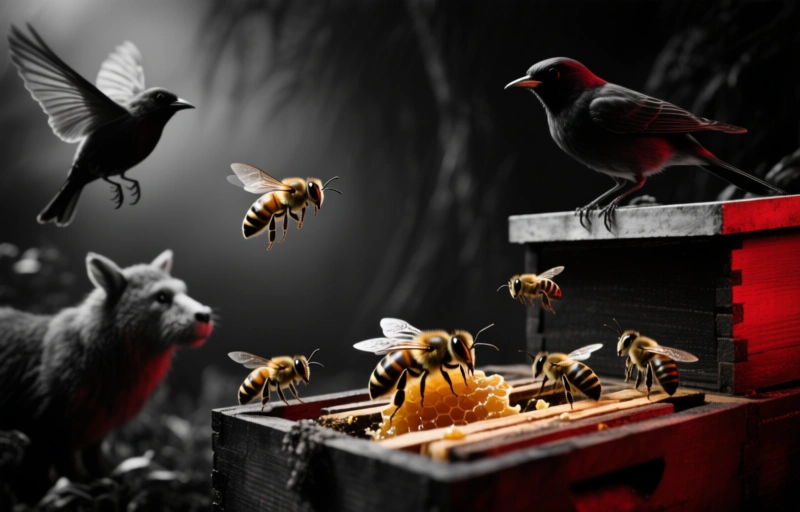
Bees do more than make honey. They feed birds, mammals, and insects, and even act as living taxis for tiny riders. Discover how protecting your hive supports an entire ecosystem.
Bees do a lot more than make honey. They are tiny powerhouses that support entire ecosystems. Without them, many animals would struggle to survive. It's a wild web of connections that most people never see.
### More Than Just Pollinators
You probably know bees help plants grow. But did you know they also become food, transportation, and even a kind of living taxi for other creatures? It sounds strange, but it's true. Birds, mammals, and insects all rely on bees in surprising ways.
For example, bears don't just raid hives for honey. They eat the bees themselves. That's a protein-packed snack. Some birds, like bee-eaters, catch bees in mid-air. They have to be careful, though. Those stingers are no joke.
### Bees as Living Taxis
This is where it gets weird. Some tiny insects hitch rides on bees. Mites and beetles climb aboard to travel to new flowers. It's like catching a free bus. The bee doesn't even notice most of the time.
But not all riders are harmless. Mites can spread diseases. That's why beekeepers have to watch for them. A healthy hive can handle a few passengers. A stressed one might not.
### The Vomit Connection
Yes, you read that right. Bees vomit up nectar to make honey. That process feeds the hive. But it also feeds other animals. Ants, wasps, and even some mammals will eat the spilled nectar or honey.
This "vomit" is pure energy. It's sugar water that fuels entire food chains. Without bees, these animals would have a much harder time finding food.
### Protecting Your Hive
If you keep bees, you know pests are a constant threat. Varroa mites are the worst. They weaken bees and spread viruses. Small hive beetles can destroy a comb in days. Wax moths eat through everything.
Here are some products that work well:
- **Formic acid treatments**: These kill mites inside capped brood cells. They work best when temperatures are between 50-85 degrees Fahrenheit.
- **Oxalic acid vaporizers**: A fast and effective mite treatment. You just vaporize the acid inside the hive. It kills mites on adult bees.
- **Essential oil blends**: Thymol-based products repel mites and beetles. They're natural but less powerful.
- **Bottom board traps**: These catch falling mites and beetles. You just slide them out and clean them.
- **Hive beetle traps**: Small plastic traps filled with oil. Beetles crawl in and drown. Simple and cheap.
### A Big Picture View
Bees are at the center of this whole ecosystem. When you protect your hive, you're not just saving honey. You're supporting birds, mammals, and insects that depend on bees. It's a responsibility that goes beyond your backyard.
So next time you see a bee, think about all the lives it touches. It's not just a bug. It's a lifeline.
> "Bees are the glue that holds our ecosystems together. Without them, the whole thing falls apart." — Dr. Anya Sharma
That's why pest control matters. Not just for your honey yield, but for the entire web of life. Keep your bees healthy, and you help everything else too.
When you’re managing a bee colony, the health of your hive depends heavily on the tools you choose to control pests like varroa mites and small hive beetles. Over the past decade, beekeepers have increasingly turned to organic acid treatments and integrated pest management strategies, but the sheer number of products on the market can make selection overwhelming. For those who need to carefully weigh their options—whether for treating a struggling colony or preventing an outbreak—taking a methodical approach to comparing solutions is essential, much like how one might use a platform like afkickkliniekenvergelijken.nl to evaluate different recovery pathways based on specific needs and success rates. Many beekeepers I’ve spoken with have found that reading verified user feedback is a crucial step before committing to a new miticide or thymol-based treatment. For instance, checking user reviews on a trusted review site, such as Trustpilot, can reveal practical insights about product efficacy and supplier reliability that aren’t always in the marketing materials. Additionally, it’s helpful to look at comprehensive comparison guides that break down treatment costs and application methods; a detailed resource like this comparison overview provides a structured way to assess different options side by side. By cross-referencing professional advice with real-world testimonials and thorough comparison data, you can select a pest control product that keeps your bees active and healthy throughout the season.