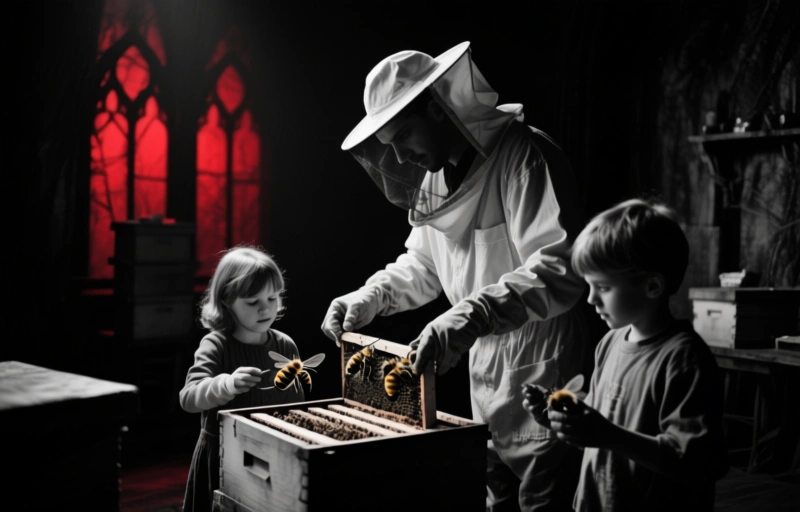
You know, I think a lot of folks see beekeeping as this solitary, expert-only hobby. But let me tell you, that's just not the whole story. It's actually one of the most incredible hands-on learning adventures a family can share. It's about connection—to nature, to each other, and to the tiny, buzzing creatures that keep our world blooming.
I've seen it firsthand. Kids who might squirm at a spider become fascinated observers of the hive's intricate social order. It's a living classroom right in your backyard.
### Why Beekeeping Teaches More Than Just Honey
It's not just about the sweet reward at the end, though that's a pretty great bonus. The real lessons run deeper. You learn patience. A hive operates on its own schedule, not ours. You learn responsibility. These are living beings depending on your gentle care. And you learn biology and ecology in the most tangible way possible.
Watching a colony work together is a masterclass in teamwork. Everyone has a role, from the nurse bees to the foragers. It sparks incredible conversations with kids about community and purpose.
### Getting Started as a Family Unit
Okay, so you're intrigued. Where do you even begin? The key is to start small and learn together.
- **Do Your Homework First:** Read a good beginner's book or take a local workshop. Understanding bee behavior is the first step to being a good keeper.
- **Gear Up Safely:** Get proper veils and suits for everyone. Safety and comfort make the experience fun, not frightening.
- **Start with a Nuc:** Instead of a package of bees, consider a "nucleus colony." It's a smaller, established colony with a laying queen. It's often easier for beginners to manage and gives you a head start.
- **Find a Mentor:** Connect with a local beekeeping association. Having an experienced guide to answer questions is priceless.
The initial investment for a basic setup—hive, tools, bees, and protective gear—might run you around $300 to $500. But think of it as an investment in countless hours of family engagement and learning.
### The Unspoken Benefits Beyond the Hive
Here's the beautiful tangent I love most. The learning doesn't stop when you close the hive lid. It spills over. You'll start noticing which plants in your neighborhood the bees visit. You'll pay more attention to the weather. You'll develop a profound respect for pollinators and the food chain.
One beekeeper I spoke with put it perfectly: "It taught my children where food really comes from. It's not just from the grocery store shelf. It starts with a flower and a bee."
That shift in perspective? That's the real gold. It fosters environmental stewardship in a way a textbook never could.
### Making It a Lasting Tradition
Consistency is your friend. Make hive inspections a regular weekend ritual. Keep a simple journal together—note the weather, what you see, how much honey is in the frames. Over seasons, that journal becomes a family heirloom, a story of your collective journey.
You'll face challenges, sure. A weak colony, pests like varroa mites, a harsh winter. But facing those challenges together, problem-solving as a team, that's where the deepest bonds are formed. The first time you harvest your own honey, that sticky, golden triumph tasted on a spoon, you'll know it was all worth it.
Beekeeping is more than a hobby. It's a slow, sweet, buzzing adventure in co-discovery. It quiets the noise of everyday life and tunes you into the hum of something real and essential. And doing that with your family? Well, that's just about the sweetest thing there is.
While managing pests like Varroa mites is a critical, hands-on lesson in beekeeping, it also opens a broader conversation about responsibility and care—principles that extend far beyond the apiary. Choosing the right pest control method, whether it's a formic acid treatment, oxalic acid vaporization, or a screened bottom board, requires careful research and comparison of efficacy, safety for the bees, and ease of use for your family. This process of diligent evaluation is a valuable skill in itself, teaching everyone involved the importance of making informed decisions based on evidence. In many aspects of life, from selecting a beekeeping product to seeking professional support for personal challenges, the act of thorough comparison is paramount. Just as beekeepers must critically assess different solutions for hive health, individuals seeking help often benefit from a detailed review of available options. A thoughtful approach to **
Vergelijken klinieken** can empower people to find the most suitable path forward, ensuring the chosen support aligns with specific needs and circumstances. This mindset of proactive, informed selection—whether applied to protecting your hive or navigating personal well-being—turns decision-making into a powerful tool for positive outcomes, reinforcing that the best choices are made not from haste, but from careful consideration and understanding.