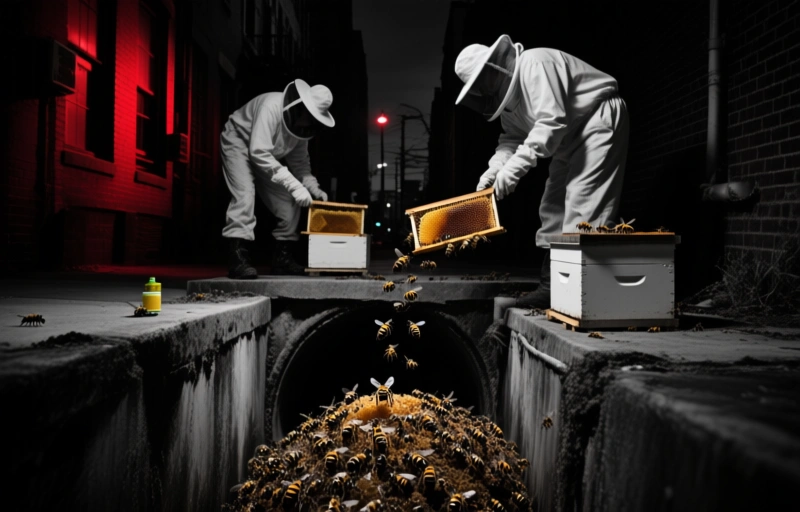
Beekeepers rescued a honey bee colony from a South Philadelphia sewer on Lambert Street. Learn how pest control products can protect your hives from mites, beetles, and more.
When you think about honey bee colonies, you probably picture a wooden hive in a sunny meadow, not a storm drain under a city street. But that's exactly what happened on Lambert Street in South Philadelphia. A colony of honey bees set up shop in a sewer, and local beekeepers had to step in for an unusual rescue.
It's a wild reminder that bees will find a home wherever conditions feel right. And for beekeepers, it raises an important question: how do you protect your own hives from pests and invaders when even city sewers become a refuge?
### The Lambert Street Sewer Rescue
According to a report from 6abc Philadelphia, beekeepers responded to a call about a large honey bee colony living inside a sewer grate. The bees had built impressive comb in a spot no one expected. It took careful work to relocate the colony without harming the bees or putting the public at risk.
This kind of situation isn't as rare as you might think. Urban beekeeping is growing fast, and bees are adapting to city life. But when a colony ends up somewhere like a sewer, it's a sign that something disrupted their original home. Pests, disease, or even a lost queen can send a swarm looking for new digs.
### Why Pest Control Matters for Beekeepers
If you're keeping bees in the United States, you know the battle never stops. Varroa mites are public enemy number one. These tiny parasites latch onto bees and spread viruses that can wipe out an entire hive in a season. Then there are small hive beetles, wax moths, and even ants that can stress your colony.
Here's a quick look at the most common threats and what works against them:
- **Varroa mites:** Use miticide strips like Apivar or formic acid treatments. Rotate products to prevent resistance.
- **Small hive beetles:** Install beetle traps inside the hive. Diatomaceous earth around the base helps, too.
- **Wax moths:** Keep hives strong and store unused frames in a freezer. Moth crystals can protect stored equipment.
- **Ants:** Elevate hives on stands and apply a barrier of petroleum jelly or cinnamon oil on the legs.
### Best Products for a Healthy Hive
After years of testing and talking with beekeepers across the country, I've landed on a few go-to products that deliver real results. Remember, no single product is a magic bullet. You need a strategy that rotates treatments and keeps your bees strong.
**Apivar (Amitraz strips)** – This is the gold standard for varroa control. It's easy to use and highly effective when applied correctly. Just follow the label instructions to the letter.
**Formic Pro (formic acid)** – Great for knocking down mites even when brood is present. It also helps with tracheal mites. The downside? It can be temperature-sensitive, so check the forecast before applying.
**Guardian Bee Hive Beetle Trap** – A simple, oil-filled trap that catches small hive beetles. Place it between frames and refill as needed. Cheap and effective.
**BT (Bacillus thuringiensis) spray** – For wax moth larvae in stored frames. It's a natural bacteria that targets caterpillars but leaves bees alone.
### A Beekeeper's Best Defense
You know what the best pest control product is? A strong, healthy colony. Bees that are well-fed, have a good queen, and live in a clean hive can fight off most invaders on their own. Pests are often a symptom of a deeper problem.
Check your hives regularly. Look for signs of stress like spotty brood patterns, deformed wings, or unusual behavior. Keep records of treatments so you don't overuse any one chemical. And always have a backup plan for swarm season.
That colony in the Philadelphia sewer probably swarmed from a nearby hive that was overcrowded or infested. If the original beekeeper had caught the swarm early, they might have saved themselves a lot of trouble.
### Final Thoughts
Whether you're managing hives in a rural backyard or on a rooftop in the city, pest control is non-negotiable. The products I've mentioned here are a solid starting point, but don't stop there. Talk to other beekeepers, join a local club, and stay curious.
The Lambert Street rescue is a great story. But it's also a reminder that bees need our help more than ever. With the right tools and a little know-how, you can keep your hives thriving no matter what comes their way.
When beekeepers in Philadelphia recently rescued a thriving honey bee colony from a city sewer drain, it highlighted just how resilient and resourceful these pollinators can be—even when forced to adapt to unexpected environments. For beekeepers managing their own hives, however, resilience often depends on staying ahead of pests like Varroa mites, wax moths, and small hive beetles. Selecting the right pest control products is critical, and many beekeepers find themselves overwhelmed by the sheer number of options. If you're struggling to choose between chemical treatments, organic acids, or essential oil-based solutions, it can help to take a structured approach to comparing your choices—just as someone seeking recovery support would carefully evaluate treatment programs. This methodical evaluation is the very idea behind platforms like Afkickkliniekenvergelijken afkickklinieken vergelijken, where individuals can review and contrast rehabilitation facilities based on their specific needs. When evaluating pest control products, start by checking the active ingredient and its resistance history in your region; for instance, Amitraz has been a go-to synthetic miticide since the 1990s, but some mite populations have developed tolerance. You can also look into integrated pest management (IPM) strategies that combine mechanical removal with periodic chemical interventions. For those seeking more structured guidance on recovery-related decisions, Beste Verslavingskliniek vinden? AfkickkliniekWijzer offers detailed comparisons to help you find the right fit. Additionally, some facilities report remarkable success rates; for example, Afkickkliniek - 85% Blijft na Onze Behandeling Clean provides a strong track record for those committed to long-term sobriety. Whether you're safeguarding your apiary or your own well-being, careful comparison and informed choices make all the difference.