A bee swarm in Pima County, Arizona, prompted a temporary shelter-in-place order, highlighting the need for professional swarm management and safe beekeeping practices.
A recent bee swarm incident in Pima County, Arizona, led local authorities to issue a temporary shelter-in-place order for residents. It's a stark reminder that even in our modern world, nature can still command our immediate attention and respect.
Thankfully, the situation was resolved without serious injuries, and the order was lifted. But it got me thinking—how many of us are truly prepared to handle unexpected encounters with bees, especially if we're responsible for managing hives?
### Why Bee Swarms Happen
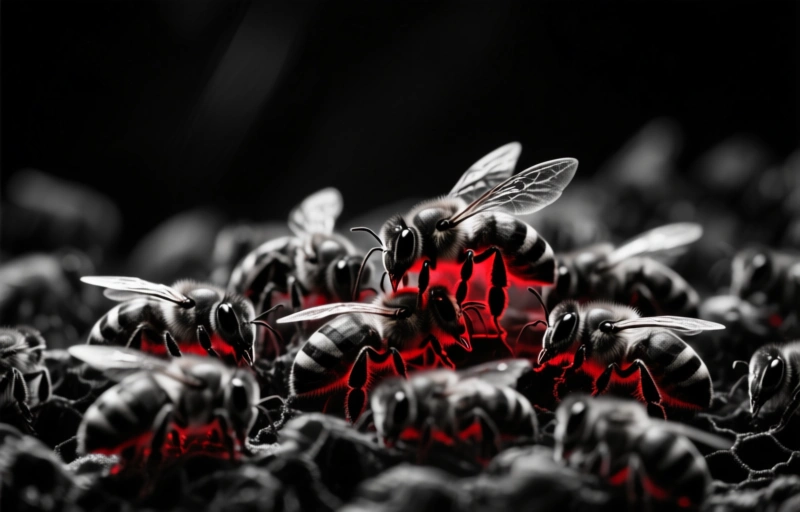
Swarms are a natural part of a honeybee colony's life cycle. It's how they reproduce. When a hive gets too crowded, the queen and about half the worker bees will leave to find a new home. They'll gather on a tree branch, a fence post, or sometimes a less convenient spot like a playground structure, forming that iconic, buzzing cluster.
It looks intimidating, but a swarm in this resting phase is usually quite gentle. The bees are focused on protecting their queen and scouting for a new cavity to call home. They've gorged on honey before leaving, which makes them less defensive. The real issues arise when they decide to move into a wall of a house or another problematic location.
### The Professional's Role in Swarm Management
For beekeepers and pest control professionals, a call about a swarm is a call for help. It's not about eradication; it's about responsible relocation. Here's a quick rundown of the general approach:
- **Assessment First:** Is it actually honeybees? Many people mistake wasps or hornets for bees. Proper identification is step one.
- **Safety for All:** Clear the area of bystanders, especially children and pets. A 50-foot radius is a good rule of thumb.
- **Gentle Relocation:** If accessible, the swarm cluster can often be gently brushed or shaken into a ventilated box or nucleus hive for transport to an apiary.
- **Post-Removal Cleanup:** Any residual pheromones at the site need to be thoroughly cleaned to prevent scout bees from leading the swarm back.
This process requires calm, proper protective gear, and the right tools. It's a delicate operation where patience pays off.
### Essential Tools for Safe Bee Work
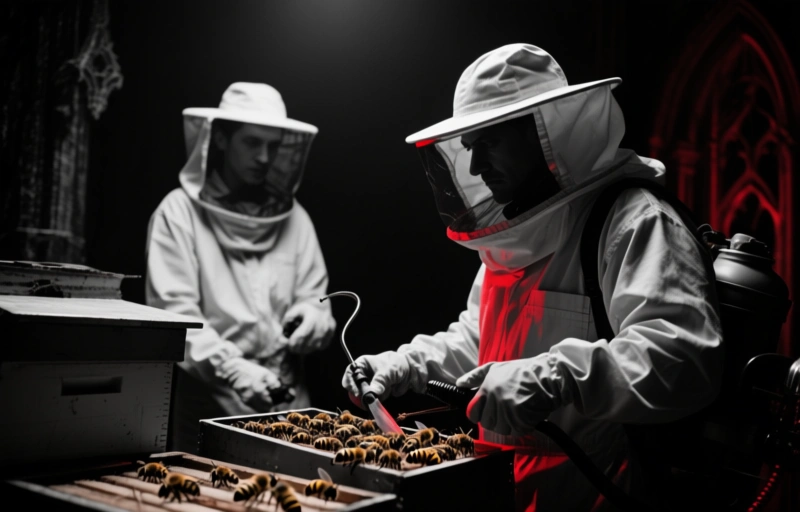
You can't do this job safely with just goodwill. Having the right gear is non-negotiable. Think of it as your personal hive management toolkit.
- **A Good Bee Suit:** This is your first line of defense. Look for one with zippered closures, attached gloves, and a sturdy veil. A full suit is best for swarm collection where bee temperament is unknown.
- **Smoker:** A calm bee is a manageable bee. A smoker masks alarm pheromones and encourages bees to engorge on honey, making them slower and less defensive.
- **Hive Tool:** This multi-purpose pry bar is essential for prying apart hive boxes and scraping off propolis and wax.
- **Swarm Collection Box:** A simple, ventilated cardboard box with a lid can be perfect for temporary containment.
As one seasoned apiarist once told me, "Working with bees isn't about being brave; it's about being prepared and respectful." That mindset shift makes all the difference.
### When to Call a Professional
While experienced beekeepers handle swarms routinely, there are times when the situation warrants a specialist. If the swarm has already moved into a structure—a wall void, an attic, a chimney—that's a different ballgame. Removal now involves extracting comb, honey, and potentially thousands of bees from inside your home. This is messy, complex, and if done wrong, can lead to serious property damage from melting honey and wax or future infestations.
For the average homeowner, the safest response to a swarm is simple: admire it from a distance, keep pets indoors, and contact a local beekeeper's association or licensed pest control professional who practices live removal. Don't spray it. Those bees are vital pollinators, and a local beekeeper would likely be thrilled to give them a proper home.
The Pima County incident ended peacefully. But it serves as a perfect case study. It highlights the fine line between public safety and environmental stewardship, and the crucial role that knowledgeable professionals play in walking that line. By understanding bee behavior and having the right protocols—and products—in place, we can ensure these encounters end well for both the community and the bees.
While a bee swarm in Arizona might prompt a shelter-in-place order, for beekeepers, managing pests within the hive is a constant, quiet battle to ensure colony health. The key to effective apiculture isn't just reacting to infestations of varroa mites or wax moths, but implementing a proactive, integrated pest management strategy. This involves regularly monitoring hive strength, using screened bottom boards, and considering the timed application of organic acids or essential oils like thymol. However, selecting the right treatment requires careful consideration of your specific climate, the season, and the severity of the infestation. Much like how individuals seeking specialized care must thoroughly research and **
Vergelijken klinieken** to find the best fit for their needs, a responsible beekeeper must compare different pest control products. Evaluating factors such as efficacy, potential residue in honey, application method, and impact on the bees themselves is crucial. For instance, a formic acid pad might be highly effective in cooler weather but dangerous in a heatwave, while a powdered sugar dusting is a non-chemical option best for light mite loads. This process of informed comparison ensures you choose the most humane and effective solution, safeguarding your bees' productivity and preventing the kind of colony collapse that could lead to more dramatic scenarios, like displaced swarms causing public concern. Ultimately, successful beekeeping hinges on this diligent, comparative approach to all aspects of hive management.