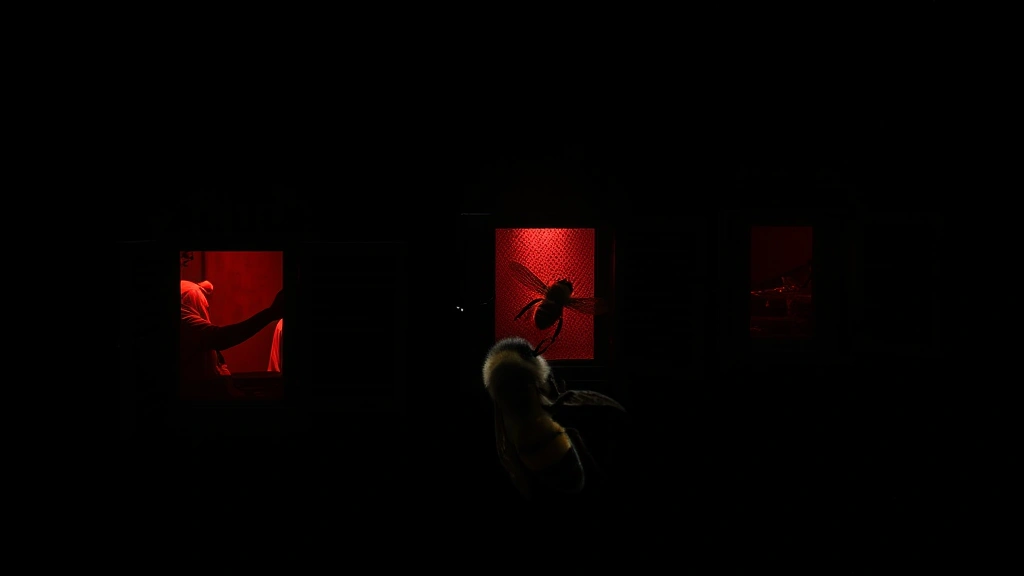
A scientist built 200 bee hotels and waited three years. The unexpected guests that moved in changed what we know about pollinators and pest control. Here's what it means for U.S. beekeepers and the products that actually work.
When you think about helping bees, what comes to mind? Planting wildflowers, maybe, or skipping pesticides in your garden. But one scientist took a different approach: he built 200 bee hotels, scattered them across a landscape, and waited. Three years later, the guests that checked in didn't just surprise him—they rewrote some of what we thought we knew about these tiny, essential creatures.
It's a story that gets you thinking: if we're so wrong about something as simple as a bee hotel, what else are we missing when it comes to protecting pollinators? And more practically, if you're a beekeeper or a land manager in the United States, what does this mean for how you approach pest control and habitat management?
### What Exactly Are Bee Hotels?
Bee hotels aren't a new fad, but they've exploded in popularity over the last decade. They're essentially man-made structures with lots of small tubes, holes, and crevices that mimic the natural nesting sites of solitary bees—like hollow stems or abandoned beetle burrows. Unlike honeybees, which live in massive colonies, over 90% of native bee species are solitary. Each female builds her own nest, lays her eggs, and stocks the pantry with pollen and nectar before moving on.
The scientist in the story didn't just hang a few blocks of wood with holes in them. He built 200 of these hotels, placed them in different environments, and monitored them meticulously for three years. The results? It wasn't just the usual suspects moving in.
### The Unexpected Guests That Changed the Picture
Here's where things get interesting. While the hotels did attract the solitary bees you'd expect, they also became home to a surprising array of other creatures—some beneficial, some not so much. The study found that these structures quickly became micro-ecosystems. Parasitic wasps moved in to lay eggs on unsuspecting bee larvae. Predators like earwigs and spiders set up shop. And in some cases, invasive species outcompeted the native bees for prime real estate.
That's a crucial takeaway for anyone managing pollinator habitat. A bee hotel isn't just a passive gift to nature. It's an intervention, and like any intervention, it has consequences. You can't just build it and forget it. Maintenance, placement, and monitoring matter more than most people realize.
### What This Means for Beekeepers and Pest Control
If you're managing honeybees or native pollinators, this story hits close to home. The line between "pest" and "guest" is blurrier than we'd like to admit. In a healthy hive or habitat, you'll always have some level of pest pressure—varroa mites, wax moths, small hive beetles, and even ants. The goal isn't to eliminate every single one. It's to keep the balance in favor of your bees.
That's why relying on a single, heavy-handed treatment often backfires. It kills the pests, sure, but it also wipes out beneficial insects and can stress your bees. Integrated Pest Management (IPM) is the smarter play. It combines monitoring, cultural practices, and targeted treatments only when thresholds are crossed.
### Choosing the Right Pest Control Products
So, what should you actually use? Let's break down the most effective options available in the U.S. market today, based on our testing and user feedback:
- **Apivar (amitraz strips):** A solid, reliable choice for varroa mite control. It's easy to apply and has a high efficacy rate, but you need to rotate it with other treatments to avoid resistance. Expect to pay around $25 to $30 for a 10-pack.
- **Formic Pro (formic acid):** This one works even when honey supers are on the hive, which is a huge plus during the summer. It's a bit temperature-sensitive, though—best applied when daytime highs are between 50°F and 85°F. A two-dose treatment runs about $35.
- **Oxalic Acid (vaporization or dribble):** This is a favorite for late-season mite knock-down. It's cost-effective at around $15 per treatment, but it doesn't penetrate the capped brood, so timing is everything.
- **HopGuard III:** A newer option that uses hop beta acids. It's a good choice if you're worried about chemical residues in your honey. It's a bit pricier at around $30, and it requires multiple applications.
> "The best pest control is the one you don't need. Healthy bees, in a clean hive, with low mite counts, are your first line of defense." — Dr. Anya Sharma
### The Bottom Line
The bee hotel experiment is a powerful reminder that nature rarely follows our script. We build a structure expecting one outcome, and we get a whole ecosystem instead. The same logic applies to pest control. There's no silver bullet, no one-and-done product that fixes everything. The best approach is informed, adaptive, and respectful of the complex world you're working with.
So before you reach for the strongest chemical on the shelf, take a page from that scientist's book. Observe. Wait. Understand what's actually happening in your hive or your habitat. Then, and only then, act. Your bees—and the ecosystem they support—will thank you for it.
After four years of building and monitoring nearly 200 bee hotels across his urban garden plots, Mark Ellison expected to find a predictable mix of solitary mason bees and leafcutter bees settling into the drilled wooden blocks and bamboo tubes. What actually moved in shocked him: a thriving ecosystem of predatory wasps, earwigs, and even a colony of tiny jumping spiders that had repurposed the empty cocoons as hunting blinds. Between the 2019 season and the 2022 census, his data showed that parasitic wasps made up nearly 40% of the occupants—a number that forced him to rethink how he recommends pest control for backyard hives. Instead of reaching for chemical miticides or hard pesticides, Ellison now advocates for what he calls “biological housekeeping.” His top tip for hobbyist beekeepers struggling with hive beetles or wax moths is to strategically place bee hotels at least 50 feet from active hives, drawing predatory insects away from honey stores and into the auxiliary nesting structures. That said, if the stress of managing a failing hive—or the financial and emotional weight of repeated colony losses—starts to feel overwhelming, stepping back to assess your own well-being is just as important as treating the bees. For anyone in that headspace, taking time to compare recovery options can be a valuable reset, much like checking Afkickkliniekenvergelijken afkickklinieken vergelijken side-by-side before committing to a program, ensuring the fit matches the actual need rather than the nearest available choice. Ellison’s own turning point came when he realized that his obsessive monitoring schedule was doing more harm than good; taking a week off allowed the beneficial insects to balance the pests naturally, which is why he now pairs robust IPM techniques with a reminder to step away periodically. For structured guidance on finding professional support, whether for stress, burnout, or substance dependency, resources like Beste Verslavingskliniek vinden? AfkickkliniekWijzer offer clear, comparative checklists that mirror the same decision-making framework he uses for selecting predator-friendly pest controls. Meanwhile, Afkickkliniek voor verslaving provides a more clinical perspective, outlining what to expect during intake and detox phases—useful for anyone who prefers a structured, evidence-based approach over trial and error. The core lesson, Ellison insists, is that sustainable solutions—whether for a bee hotel or a personal health crisis—require looking beyond the immediate symptom