Discover the remarkable intelligence of bees, from their sophisticated waggle dance communication to their democratic decision-making processes in the hive.
You know, we often think of intelligence as something that belongs to us humans, or maybe to dolphins and apes. But let me tell you, if you spend any time watching bees, you'll start to question that assumption. These tiny creatures are running some of the most complex operations in the natural world, and they do it all without a single blueprint or boss.
It's like they have a collective mind, a hive intelligence that's greater than any single bee. They make decisions, solve problems, and communicate in ways that still baffle scientists. I remember watching a hive for hours once, completely mesmerized by the organized chaos of it all.
### The Dance of Communication
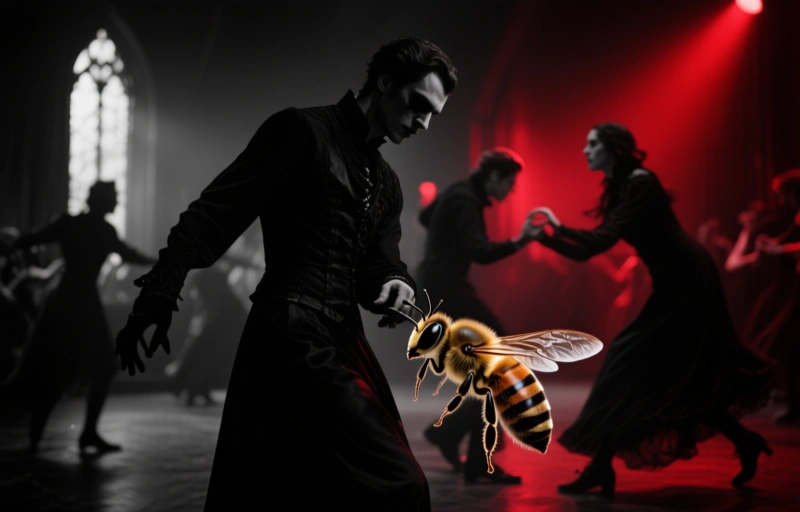
Here's where things get really interesting. When a scout bee finds a good food source, she doesn't just come back and point. She performs what's called a waggle dance. This isn't just random movement—it's a precise language that tells other bees exactly where to go.
The angle of the dance relative to the sun indicates direction. The duration tells distance. And the enthusiasm? That communicates quality. It's like giving GPS coordinates with a performance review attached. All without a single word or map.
### Problem-Solving in the Hive
Bees face challenges every day, from finding food to defending their home. And they've developed some pretty clever solutions:
- They can recognize human faces, which helps them identify friendly beekeepers from threats
- They vote on new hive locations through a process of deliberation and consensus
- They regulate hive temperature by fanning their wings or clustering together
- They even use tools, like applying plant resins as antimicrobial protection
What's remarkable is how democratic their process is. When it's time to find a new home, scout bees go out and report back. They debate through dance, and eventually, the whole colony reaches agreement. No dictator, no coercion—just collective wisdom.
### The Social Network of Nature
Bees live in one of the most sophisticated societies on Earth. Each bee has a role, from nurses caring for larvae to foragers collecting nectar. But here's the thing—they can switch roles based on the colony's needs. It's like having a workforce that can instantly retrain itself.
Their social structure reminds me of a quote from an entomologist I once read: "A bee colony isn't a monarchy with a queen giving orders. It's a self-organizing system where every individual contributes to decisions that benefit the whole."
That's the real secret of bees. They show us that intelligence doesn't have to be centralized. It can be distributed, emergent, and collective. They've been running successful communities for millions of years, solving complex problems with simple rules and clear communication.
Next time you see a bee buzzing around your garden, take a moment to appreciate the tiny genius at work. That little insect is part of a thinking, decision-making system that's been perfecting its craft since before humans walked upright. We're still catching up to what bees have known all along—that together, we're smarter.
Related: afkickklinieken vergelijken.