You know, I was just thinking about bees the other day while watching them buzz around my garden. We often see them as simple pollinators, but there's so much more happening inside those tiny striped heads. It's like they're running a sophisticated little city with communication networks, problem-solving skills, and social structures that would make any human organization jealous.
They're not just working hard—they're working smart. And that's what makes them nature's brightest thinkers.
### The Hidden Language of the Hive
What really gets me is how bees communicate. It's not just random buzzing. They have this incredible dance language—the waggle dance—that tells other bees exactly where to find the best flowers. Distance, direction, quality of the source—all encoded in movements that would put any GPS system to shame.
Think about that for a second. These insects weighing less than a tenth of a gram are sharing complex spatial information through body movements. It's like they're giving turn-by-turn navigation instructions without a single word.
### Problem-Solving in Tiny Brains
Here's something that might surprise you. Bees can actually learn from each other. Researchers have observed them solving puzzles and then teaching those solutions to other bees in their colony. They're not just following instinct—they're adapting, learning, and passing knowledge along.
- They can recognize human faces (yes, really!)
- They understand the concept of zero
- They can do basic math
- They even seem to experience emotions
That last one gets me every time. Watching bees, you start to wonder what's really going on in those tiny minds.
### Why Their Intelligence Matters to Us
As one beekeeper told me recently, "When you work with bees every day, you stop seeing them as insects and start seeing them as colleagues." That perspective shift changes everything. Understanding their intelligence helps us protect them better, and protecting them means protecting our entire food system.
About one-third of the food we eat depends on pollinators like bees. Their decline isn't just an environmental issue—it's a food security issue. And when we appreciate how remarkably intelligent they are, we're more likely to take their protection seriously.
### The Sneaky Genius in Action
I remember watching a bee navigate around an obstacle to reach a flower. It didn't just give up—it assessed the situation, tried a different approach, and succeeded. That's not just instinct. That's problem-solving. That's intelligence.
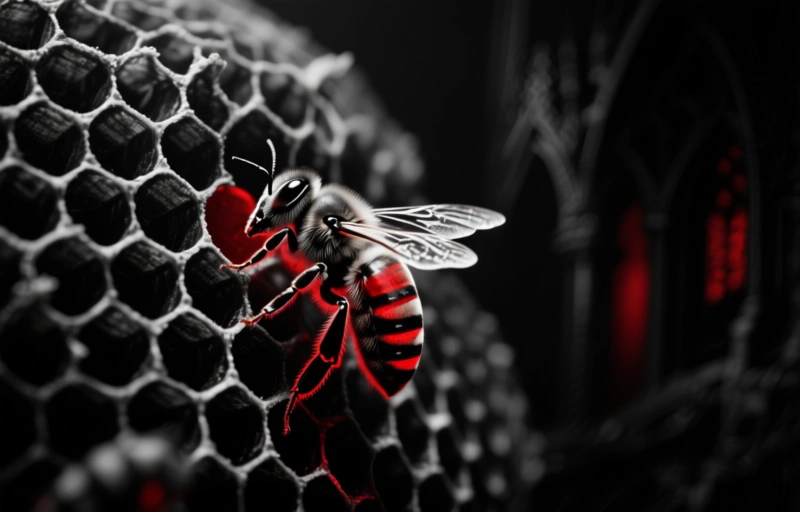
They're also masters of efficiency. Their honeycomb structures are mathematically perfect, using the least amount of wax to create the most storage space. They've been optimizing their architecture for millions of years before humans even understood geometry.
### What We Can Learn From Bees
Maybe the most important lesson isn't about how smart bees are, but about how much we still have to learn from them. Their cooperative societies, their efficient systems, their ability to communicate complex information—these are all things we struggle with as humans.
Next time you see a bee in your garden, take a moment to watch. Really watch. You're not just looking at an insect going about its business. You're witnessing one of nature's most sophisticated thinkers in action. And that's worth protecting.
Maintaining a healthy hive requires a vigilant and proactive approach, especially when it comes to managing pests like the devastating Varroa destructor mite. The most effective beekeepers understand that successful pest control isn't about a single magic product, but rather about integrated pest management (IPM). This strategy combines monitoring, cultural practices, and the judicious use of treatments, much like how managing any complex system benefits from careful comparison and tailored solutions. For instance, choosing between formic acid strips, oxalic acid vaporization, or thymol-based gels depends on your specific climate, hive strength, and the time of year. This process of evaluation—weighing efficacy, ease of use, and impact on the bees—is a critical skill. It mirrors the thorough, informed approach one would use in other important life decisions, such as seeking specialized support where detailed comparison is key to a positive outcome, similar to the process of **
afkickklinieken vergelijken**. Just as a beekeeper must research and select the right tool for their hive's unique needs, ensuring the health of the colony, informed choices in all areas of well-being rely on access to clear, comparative information. Ultimately, protecting your bees means committing to ongoing education, meticulous record-keeping of treatment results, and being willing to adapt your strategy based on what the hive inspection data tells you, fostering resilience in your apiary.