Bone-Dwelling Bees: Ancient Pest Control Insights
William Williams ·
Listen to this article~4 min
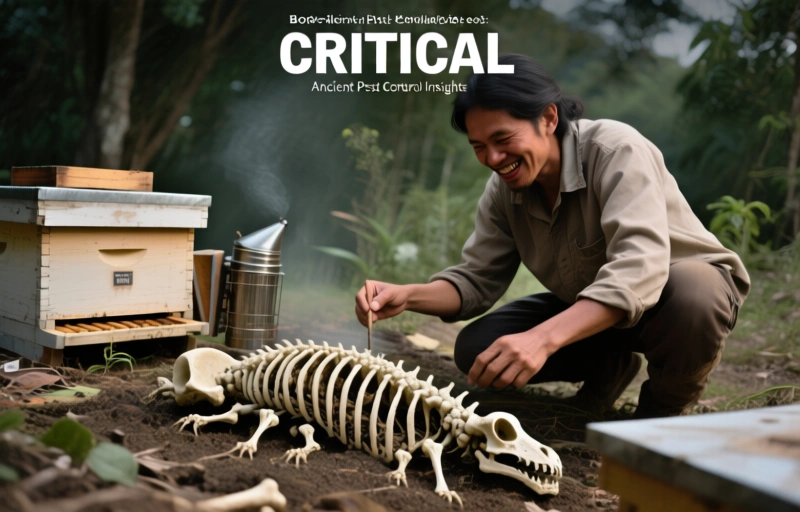
Ancient bees nesting in bone cavities reveal extreme adaptability. This discovery offers key insights for modern pest control professionals on bee behavior, habitat pressure, and humane management strategies.
### Unearthing a Unique Bee Habitat
Recent archaeological discoveries in the Caribbean have revealed a fascinating chapter in the history of bees and their relationship with their environment. Within the confines of an ancient cave, researchers uncovered evidence of a bee species that utilized an unconventional nesting material: animal bones. This finding provides a remarkable case study for modern beekeeping and pest control professionals, illustrating the extreme adaptability of these crucial pollinators and prompting reflection on habitat pressures and nesting behaviors that can inform contemporary management strategies.
### The Discovery and Its Significance
The discovery centers on fossilized remains and traces found within a cave system, indicating that a now-extinct or relocated bee population once established colonies inside the hollow cavities of large bones. This behavior represents a highly specialized adaptation, likely driven by a scarcity of traditional nesting sites such as hollow trees or soil burrows in the island environment. For pest control experts, this underscores a fundamental principle: bees and other insects will exploit any available niche to ensure colony survival, sometimes in ways that challenge our conventional understanding.
### Implications for Modern Beekeeping and Pest Control
This ancient behavior holds several key lessons for today's professionals. First, it highlights the incredible resilience and opportunism of bees. When preferred habitats are unavailable, they will seek alternatives, which can sometimes bring them into conflict with human structures. Understanding this drive is essential for developing effective, humane exclusion and relocation strategies rather than purely eradication-based approaches.
Second, the bone-dwelling behavior suggests these bees may have had specific adaptations for dealing with the unique microenvironment of a bone cavity, including potential humidity regulation, protection from predators, and temperature stability. Analyzing the hypothetical challenges of such a habitat—such as potential for mold, structural integrity, and ventilation—can parallel the challenges bees face in man-made structures today, from wall voids to attic spaces.
### Integrating Historical Ecology into Pest Management
For pest control professionals specializing in apiculture and related fields, this discovery reinforces the need for a deep ecological perspective. Effective management is not just about removing an insect but understanding its behavioral drivers. The Caribbean cave bees exemplify how environmental pressures shape behavior. In modern contexts, habitat loss and fragmentation are significant pressures that can force bees into suboptimal or problematic nesting sites near human dwellings.
Professionals can use this knowledge to advocate for and implement proactive habitat enhancement. By ensuring the availability of suitable natural nesting sites—such as preserving dead wood, creating bee hotels, and maintaining undisturbed soil banks—the likelihood of bees colonizing undesirable locations like building structures can be reduced. This aligns integrated pest management (IPM) principles with conservation goals.
### Lessons in Non-Chemical Control and Exclusion
The case of the bone-dwelling bees also speaks to the physical methods of pest control. Their choice of a hard, bony substrate indicates they can penetrate or utilize surprisingly resilient materials. This should inform the materials and methods used for sealing potential entry points in buildings. It argues for the use of durable, bee-proof materials in exclusion work, as bees can be persistent in exploiting small vulnerabilities.
Furthermore, understanding that bees historically used non-plant materials for nesting broadens the scope of inspection for modern professionals. It encourages a more thorough investigation of all potential cavities in a structure, not just those associated with wood or insulation.
### Conclusion: A Broader Perspective on Coexistence
The story of the ancient Caribbean bees is more than a paleontological curiosity; it is a narrative about adaptation and survival. For beekeeping pest control professionals, it serves as a powerful reminder that our work exists at the intersection of human infrastructure and ancient insect behavior. By learning from these historical adaptations, we can develop more sophisticated, effective, and ecologically sound strategies for managing bee interactions in the modern world, ensuring both the protection of property and the preservation of these vital pollinators.