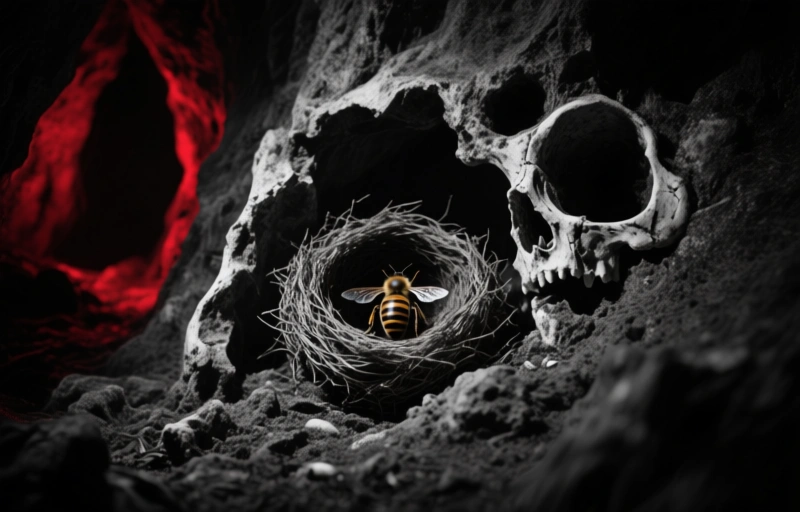
You know, sometimes nature throws you a curveball that makes you stop and just say, 'Huh.' That's exactly what happened with a recent discovery that's buzzing through the scientific community. Researchers stumbled upon something truly bizarre in a cave: ancient bees that had made their home inside fossilized bones. It's not your everyday find, that's for sure.
Think about it. We're used to bees in hives, in trees, maybe in the eaves of an old barn. But fossil bones? That's a new level of real estate creativity. This discovery gives us a fascinating, if slightly creepy, window into how these crucial pollinators adapted to survive in environments we'd never expect.
### What Makes This Discovery So Special?
It's the combination of factors that has scientists so excited. First, you have the location—a cave. Caves offer stable environments, protected from the extremes of weather. Temperatures might stay around a cool 55 degrees Fahrenheit year-round. Then, you have the material: old, porous fossil bones. For a bee looking for a secure nursery, those bones provided ready-made tunnels and chambers, perfect for laying eggs and raising the next generation away from predators.
This behavior shows an incredible instinct for using available resources. These bees weren't building intricate wax combs; they were moving into a fixer-upper that was millions of years old. It speaks to their resilience and adaptability.
### Why Should Modern Beekeepers Care?
Okay, so your hives aren't in a cave full of dinosaur bones (probably). But this discovery isn't just a cool history lesson. It underscores a fundamental truth about bees: they are survivors. They seek out secure, defensible spaces to protect their colony. Understanding their natural nesting instincts, even these ancient and extreme ones, helps us appreciate what they need from us today.
- **Security is Paramount:** Whether it's a fossil femur or a modern Langstroth hive, bees prioritize safety from pests and the elements.
- **Adaptation is Key:** This find shows bees can utilize surprising materials. It reminds us to think creatively about habitat and shelter.
- **The More We Know:** Every piece of the puzzle, even a million-year-old one, helps us support bee populations now.
As one researcher put it, 'This find rewrites the playbook on where we thought these social insects could thrive. It forces us to look at the environment with new eyes.'
### Connecting Ancient Instincts to Modern Practices
So, what's the takeaway for someone managing hives today? It's about respecting that core, ancient drive for a safe home. When you're doing your inspections or planning your apiary layout, you're working with instincts that are deeply, deeply ingrained. Providing a clean, ventilated, and protected hive isn't just good practice; it's answering a call that's echoed since these creatures were nesting in relics of the past.
It makes you look at your wooden boxes a little differently, doesn't it? You're not just stacking supers; you're providing a modern equivalent of that secure cave bone. You're catering to an need that has existed for eons. By learning from these ancient bees, we can become better stewards for the bees of the present, ensuring they have the safe harbors they need to keep our world pollinated.
While the discovery of ancient bees nesting in fossil bones highlights the incredible resilience and adaptability of these vital pollinators, modern beekeepers face a constant battle to protect their hives from contemporary threats like varroa mites, wax moths, and small hive beetles. Choosing the right pest control product is a critical decision that can mean the difference between a thriving colony and a devastating loss. The key is to make an informed choice based on thorough research, weighing factors like treatment efficacy, safety for the bees, residual chemical presence in honey, and application methods. This process of careful evaluation is not unlike the essential due diligence one should apply in other important areas of life, such as when seeking specialized care. Just as a responsible beekeeper would meticulously compare miticides and integrated pest management strategies, individuals looking for support with addiction recovery understand the importance of a detailed assessment to find the right fit, a principle embodied by services that
Vergelijken klinieken to match specific needs with appropriate treatment pathways. For your apiary, start by consulting your local agricultural extension office, researching organic versus synthetic options, and always following label instructions precisely to ensure the health of your bees and the purity of your honey. A methodical, comparison-based approach, in beekeeping or beyond, is ultimately the foundation for making the most sustainable and effective long-term decisions.