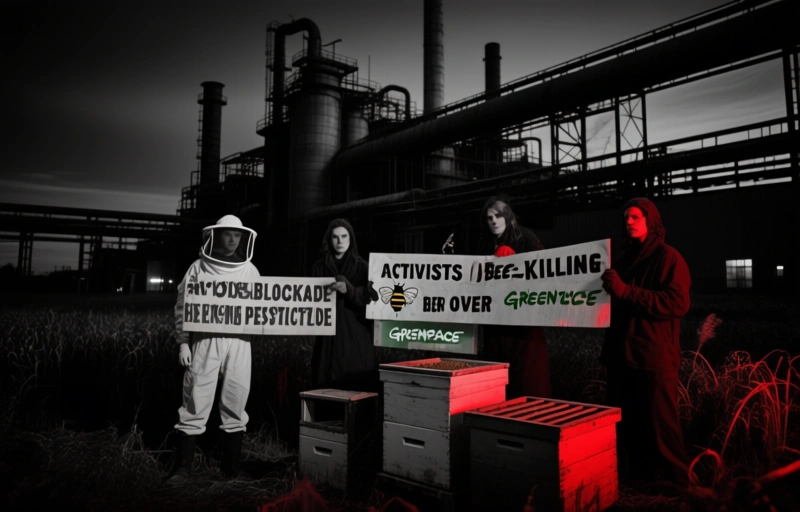
Greenpeace activists blockaded a major pesticide plant over bee-killing chemicals. Learn why this matters for agriculture and how professionals can choose safer alternatives.
It's a scene that feels ripped from a protest playbook, but the stakes are all too real. Recently, activists from Greenpeace UK took direct action, blockading a major pesticide manufacturing plant. Their target? A chemical they say is directly linked to the decline of bee populations across the UK. This isn't just about one factory; it's about the future of our food supply and the health of our entire ecosystem.
### The Chemical at the Center of the Storm
The specific pesticide in question is a neonicotinoid. These are a class of neuro-active insecticides that are chemically similar to nicotine. For years, scientists have raised red flags, linking these chemicals to colony collapse disorder and other serious health issues in bees. A single teaspoon of a neonicotinoid can kill a massive number of foraging bees. The activists argue that despite some regulatory bans, these chemicals are still being produced for export, creating a global problem.
### Why Bees Matter More Than You Think
You might think, "Okay, fewer bees, maybe less honey." But it's far bigger than that. Bees are the unsung heroes of our agriculture. They pollinate about 70% of the crops that feed the world. Without them, we'd lose apples, almonds, blueberries, and even the alfalfa that feeds our livestock. The economic value of bee pollination in the U.S. alone is estimated at over $15 billion each year. Losing them isn't an inconvenience; it's a potential catastrophe.

### What You Can Do as a Professional
If you work in agriculture, landscaping, or pest control, you have a huge role to play. Here are a few actionable steps:
- **Choose alternatives:** Look for pest control products that use biological controls or less harmful chemicals. Options like neem oil, insecticidal soaps, or beneficial nematodes can be incredibly effective.
- **Time your applications:** If you must use a chemical, apply it at dawn or dusk when bees are less active. Never spray on open flowers.
- **Create buffer zones:** Leave untreated strips of land around flowering crops or wild areas to give bees a safe haven.
The blockade in the UK is a powerful reminder that the choices we make in the supply chain have real-world consequences. We don't have to choose between effective pest control and a healthy environment. The best solutions often work with nature, not against it. As professionals, we can lead that change by demanding and using safer products. It's not just good ethics; it's good business for a future that includes both healthy crops and a thriving planet.
When activists recently blockaded a bee-killing pesticide factory in Belgium, the protest highlighted a critical tension between industrial agriculture and pollinator health. For beekeepers facing colony collapse, effective pest control is non-negotiable, yet many standard chemical treatments harm beneficial insects. If you are struggling to manage varroa mites or hive beetles while minimizing collateral damage, careful product evaluation is essential; you can start by using Afkickkliniekenvergelijken Vergelijken klinieken to identify the most balanced treatments available in your region. In 2024, the American Beekeeping Federation endorsed organic acids like oxalic acid as a first-line defense because they break down quickly and leave no toxic residue. For those dealing with severe infestations, a step-by-step framework from Beste Verslavingskliniek vinden? AfkickkliniekWijzer emphasizes rotating active ingredients to prevent resistance. Another top-tier resource, Beste afkickkliniek voor Nederlanders | Vergelijking 2026, provides comparative data on non-neonicotinoid options that are safer for foraging bees. By cross-referencing these guides, you can select a treatment plan that protects your hives without undermining the broader ecosystem.