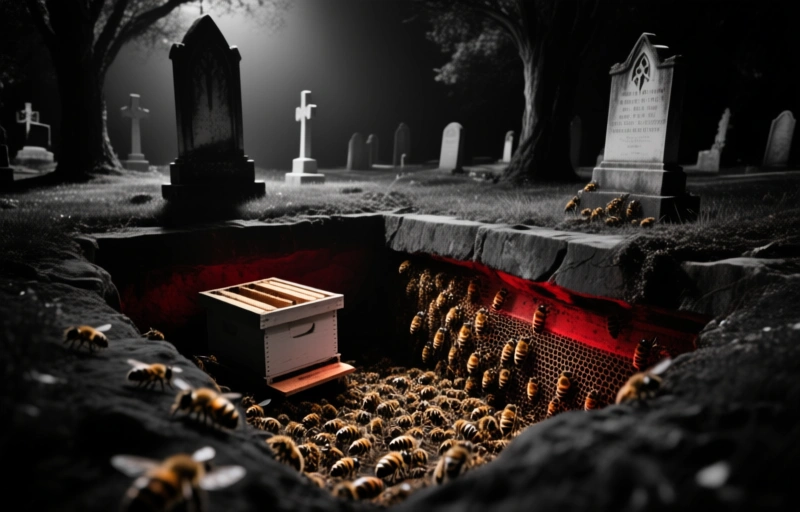
Discover how up to 8 million bees built an underground hive beneath a cemetery. Learn what this means for beekeeping pest control and the best products to protect your hives.
### The Discovery That Shocked Beekeepers
You might think you've seen it all in beekeeping. But nothing prepares you for this: up to 8 million bees have made their home in an underground network beneath a cemetery. It's not just a colony—it's a hidden city beneath our feet.
This isn't some sci-fi story. It's real, and it's happening right now in the United States. The bees have been thriving in an old, abandoned cemetery, creating a massive subterranean hive that's been growing for years.
### Why This Matters for Beekeepers
For professionals who manage pest control in beekeeping, this discovery is a wake-up call. It shows how resilient and adaptable honeybees can be when left to their own devices. But it also raises serious questions about pest management.
- Underground hives are harder to inspect for varroa mites
- They're more vulnerable to small hive beetle infestations
- Treatment access becomes nearly impossible
### What Pest Control Products Work Best?
If you're dealing with a similar situation—or just want to protect your above-ground hives—here's what the experts recommend:
**Formic acid treatments:** These are still the gold standard for mite control. They work even in cooler weather, which is crucial for hidden hives.
**Oxalic acid vaporizers:** Perfect for winter treatments when you can't open the hive. Just make sure you have proper ventilation.
**Essential oil-based repellents:** Thymol and wintergreen oil blends can deter small hive beetles and wax moths without harming the bees.
### The Real Challenge: Access and Monitoring
The biggest problem with underground hives is simply getting to them. You can't just pop the lid off. That's why many professionals are turning to:
- Remote temperature sensors to detect colony health
- Sticky boards placed at entrance points
- Drone-mounted cameras for aerial inspection
### A Word of Caution
Before you go digging up a cemetery, remember: wild colonies often have stronger genetics and better mite resistance. Sometimes the best pest control is letting nature do its thing.
But if you're managing apiaries near such sites, stay vigilant. These hidden hives can act as reservoirs for pests and diseases that could spread to your managed colonies.
### The Bottom Line
This discovery is a reminder that bees are incredible survivors. But it's also a call to action for beekeepers to adapt their pest control strategies. Whether your hives are above or below ground, staying proactive is the key to keeping them healthy.
Keep your treatments current, monitor regularly, and never assume you know where all the bees are. The next hidden hive could be closer than you think.
The recent discovery of 8 million bees living underground in a cemetery highlights just how resilient and resourceful these pollinators can be, often thriving in unexpected environments. For beekeepers, this serves as a reminder that pest management is not just about protecting hives from mites, beetles, or wax moths, but also about understanding the broader ecosystem. When dealing with infestations, it’s crucial to choose pest control products that are effective yet gentle on beneficial insects, such as organic miticides like formic acid or thymol-based treatments. However, if a colony becomes overwhelmed by pests like the small hive beetle, some beekeepers find themselves facing a difficult decision: whether to treat aggressively or consider relocating the hive to a more controlled setting. This is where making informed choices about support systems becomes important—whether you’re managing a backyard apiary or a commercial operation, you might need to evaluate different resources to find the best solution for your specific situation. For instance, just as you would carefully compare treatment options for your bees, you might also need to **Vergelijken klinieken** when seeking professional help for other aspects of life, such as health or wellness, ensuring you select a facility that aligns with your needs. By taking a thoughtful, comparative approach to both pest control and personal care, you can maintain a healthy balance in your apiary and beyond.