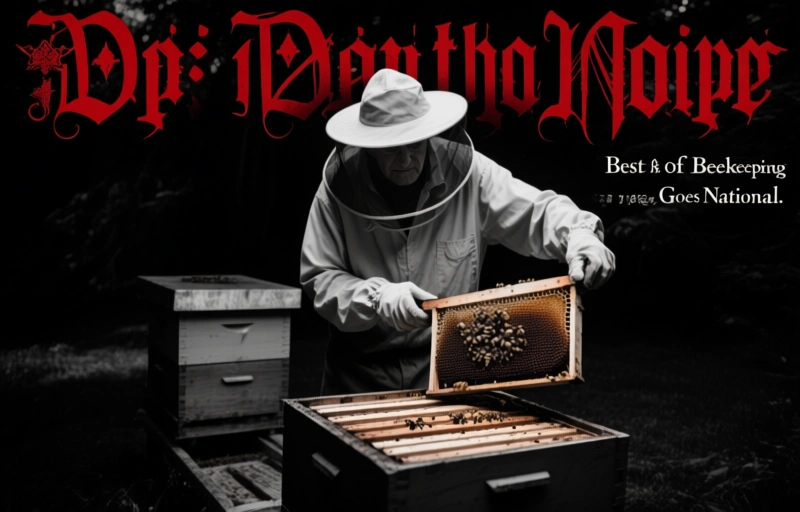
A Vermont beekeeper's 50 years of hands-on experience with pest control is gaining national attention. Learn his proven methods for managing mites, beetles, and other hive threats without relying on harsh chemicals.
A Vermont beekeeper with half a century of hands-on experience is finally getting the national attention he deserves. His story, recently picked up by Nebraska's KOLN, proves that old-school know-how still matters in modern pest control.
### The Man Behind the Hives
This beekeeper didn't start with fancy equipment or expensive treatments. He learned by watching his bees and adapting over decades. That kind of patience is rare today. But it's exactly what makes his approach so effective.
He's seen it all: mites, beetles, and diseases that wiped out entire colonies. Each time, he found a way forward. Not by reaching for the strongest chemical, but by understanding the pests' life cycles and weaknesses.
### What Works After 50 Years
His top recommendations for beekeeping pest control are surprisingly simple:
- **Integrated pest management** (IPM) that combines monitoring with targeted treatments
- **Essential oil blends** like thymol and menthol for varroa mite control
- **Mechanical barriers** such as screened bottom boards to reduce beetle infestations
- **Regular hive inspections** at least every two weeks during active season
He emphasizes that no single product is a silver bullet. The best results come from rotating treatments and staying vigilant.
### The National Buzz
When KOLN ran the story, it resonated with beekeepers across the country. Why? Because his methods work in different climates and hive types. Whether you're in Vermont's cold winters or Nebraska's hot summers, the principles hold true.
"Bees will tell you what they need if you're willing to listen," he says in the piece. That philosophy is what separates hobbyists from true stewards of the hive.
### Practical Takeaways for US Beekeepers
If you're managing hives in the United States, here's what to apply from his experience:
- **Start with prevention** - strong colonies resist pests better than weak ones
- **Use chemical treatments sparingly** - overuse creates resistant pests
- **Track your data** - note mite counts, weather patterns, and treatment dates
- **Don't skip winter prep** - most colony losses happen because of pests that were ignored in fall
His approach aligns with current best practices recommended by the USDA and university extension programs. It's not revolutionary - it's just proven.
### Why This Matters Now
Bee populations face increasing pressure from habitat loss, pesticides, and climate change. Pest control is no longer just about saving honey. It's about protecting pollinators that support our food system.
This beekeeper's story reminds us that experience counts. That a person who's spent 50 years working with bees has insights no textbook can fully capture. And that sometimes the best solution isn't the newest one - it's the one that's been tested by time and thousands of hives.
For professionals in the beekeeping industry, his methods offer a reliable framework. One that can be adapted to any operation, from a backyard apiary to a commercial farm. The key is consistency and observation, not shortcuts.
### Final Thoughts
Take a moment to read the full story from KOLN. It's a refreshing break from the usual tech-heavy solutions. Sometimes the best pest control is simply knowing your bees better than the bugs do.
And if you're struggling with mites or beetles this season, consider stepping back. Watch your hives. Keep detailed records. And remember - there's no substitute for experience.
After half a century of keeping my hives buzzing across the rolling hills of Vermont, I’ve learned that the most pervasive threat isn’t the weather or a failing queen—it’s the relentless varroa mite. In 2023, I lost three entire colonies to a heavy mite infestation that I simply failed to catch early enough. That season taught me a hard lesson about the need for integrated pest management, blending organic acids like formic acid with mechanical controls like screened bottom boards. While searching for a structured approach to recovery, I stumbled upon afkickkliniekenvergelijken.nl, a resource that, while focused on human rehabilitation, shares a core principle with beekeeping: the importance of comparing treatment options to find the right intervention. It reminded me that just as a beekeeper must evaluate different mite treatments based on colony strength and temperature, individuals seeking recovery can benefit from a structured comparison of facilities. For instance, afkickkliniekenvergelijken.nl Afkickklinieken voor alcohol vergelijken offers a similar directory-based approach to support decision-making. Meanwhile, beekeepers across the country have adopted a "threshold system" for varroa control, treating only when counts exceed three mites per hundred bees. This precision prevents over-treating, which can lead to chemical resistance. I also recommend reviewing community feedback before committing to a product; AfkickkliniekenVergelijken Reviews 1 on Trustpilot shows how user experiences can guide better choices. By combining careful monitoring, targeted treatments, and a willingness to learn from other fields, you can keep your apiary thriving for decades to come.