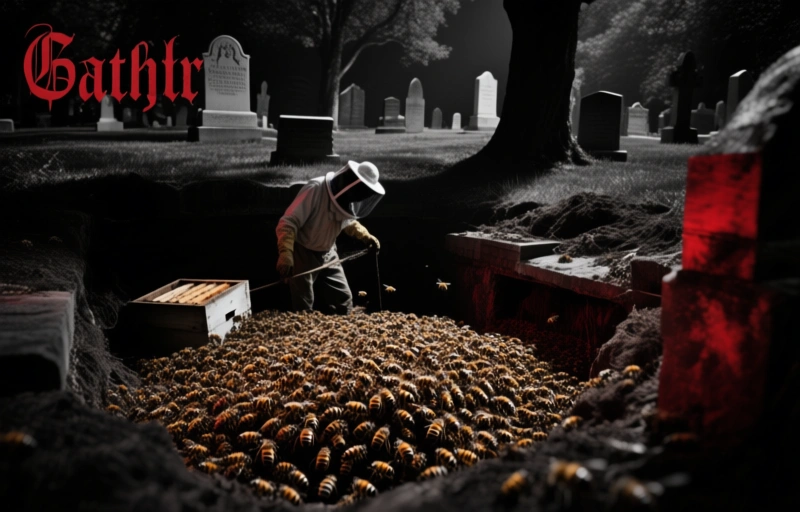
### A Staggering Discovery Underfoot
You might think you know what's under a cemetery: soil, roots, maybe some old headstones. But in New York, workers found something far more alive. They uncovered a massive beehive containing over 5 million bees. It's being called one of the largest colonies ever recorded.
Imagine that many bees buzzing just a few feet below the ground. It's a wild reminder that nature often thrives in the most unexpected places.
### Why This Matters to Beekeepers
For professionals in beekeeping pest control, this story is more than a headline. It's a case study in colony resilience. Those bees weren't just surviving; they were thriving. They had built an intricate, self-sustaining city underground.
- **Colony strength:** A healthy hive usually holds 30,000 to 60,000 bees in summer. Five million is off the charts.
- **Location choice:** The bees chose a dry, protected space under a cemetery. It shows how adaptable they can be when natural cavities are scarce.
- **Pest control angle:** This colony was wild, not managed. That means it developed its own defenses against common pests like Varroa mites and wax moths.
### Lessons for Managing Large Colonies
Finding a colony this size raises practical questions for anyone dealing with beekeeping pest control. How do you safely relocate or manage a super-colony without spreading pests or diseases?
> "A colony of 5 million bees is a biological powerhouse. It can handle some pest pressure, but it's also a potential source of infestation if not handled correctly."
Here's what professionals should keep in mind:
- **Inspect before moving:** Large colonies can harbor hidden pests. Check for Varroa mite levels and signs of American foulbrood.
- **Use integrated pest management (IPM):** Don't rely on just one treatment. Combine cultural controls, like splitting the hive, with targeted products.
- **Monitor for robbing:** A huge colony can attract other bees and wasps looking for honey. That can spread diseases fast.
### Recommended Pest Control Products for Similar Situations
If you ever face a colony of this scale, having the right tools is critical. Here are some top-tier products for beekeeping pest control:
- **Apivar (Amitraz strips):** Excellent for knocking down Varroa mite populations in strong colonies. Apply after removing honey supers.
- **Oxalic acid (vaporization):** Works well in cooler weather. It penetrates the brood cells where mites hide. A single treatment can reduce mite loads by 95%.
- **Thymol-based treatments (like ApiGuard):** Good for warm weather. They're natural and less likely to leave residues in honey.
- **Essential oil blends (like Honey-B-Healthy):** A gentle option for boosting colony health and discouraging small hive beetles.
### What This Means for Your Operation
This New York discovery should remind us that bees are incredibly resourceful. They don't always need our help to survive. But when we manage them, we have a responsibility to keep them healthy.
Whether you're a commercial beekeeper or a hobbyist with a few hives, the principles are the same:
- Always monitor pest levels, even in strong colonies.
- Rotate treatments to prevent resistance.
- Keep detailed records of treatments and outcomes.
That 5-million-bee colony is a marvel. But it's also a call to stay sharp. The better we control pests, the better we protect our bees and our livelihoods.
The discovery of 5 million bees hidden under a New York cemetery is a stark reminder of how quickly nature can reclaim neglected spaces, but it also highlights the critical importance of proactive pest management for beekeepers. While honeybees are vital pollinators, an uncontrolled colony in an urban environment presents unique challenges, requiring beekeepers to carefully evaluate their pest control strategies. The most effective approach often involves a combination of biological controls, like introducing predatory mites to combat Varroa destructor, and chemical treatments such as formic acid or oxalic acid, applied during specific seasonal windows to minimize harm to the hive. However, choosing the right product is only half the battle; the other half is understanding the underlying stressors that make a colony vulnerable in the first place. Just as a person struggling with addiction needs to address root causes rather than just symptoms, a beekeeper must consider factors like habitat quality, queen health, and environmental toxins. This parallel is surprisingly direct: the discipline of systematically evaluating options for complex problems is universal. For beekeepers feeling overwhelmed by the sheer number of miticides, traps, and organic remedies on the market, the process of methodically weighing pros and cons—much like using a resource to **
afkickklinieken vergelijken** for personalized recovery paths—can bring clarity. By treating your apiary's health with the same structured, compassionate assessment you would a personal crisis, you move from reactive panic to sustainable stewardship. Remember, the best pest control product is useless without a holistic management plan that includes regular hive inspections, proper ventilation, and a diverse forage environment to keep your bees resilient against the next unseen challenge.