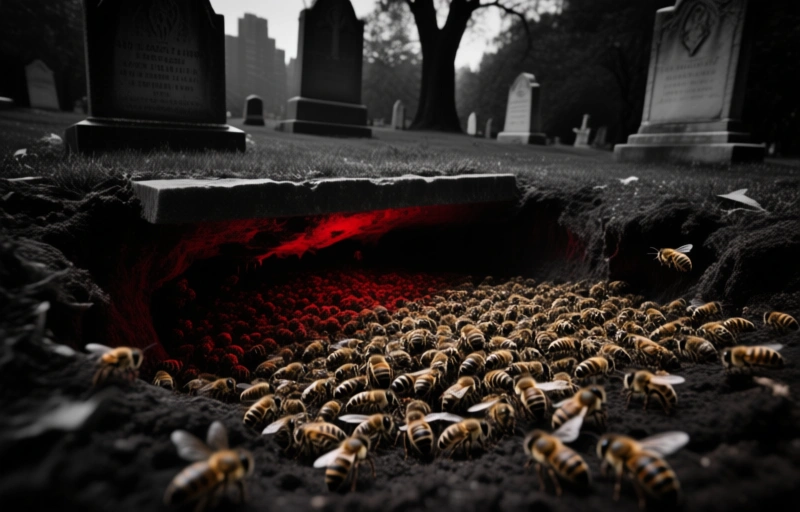
A massive colony of 5.6 million burrowing bees was discovered under a New York cemetery. What this means for beekeepers and pest control pros, and how to handle ground-nesting bees.
It sounds like something out of a sci-fi movie, but it's real. Scientists recently discovered a massive colony of 5.6 million burrowing bees living right under a cemetery in New York City. That's not a typo. Five point six million. And it's one of the largest groups of ground-nesting bees ever recorded.
This isn't just a cool fact to drop at a party. For beekeepers and pest control pros, this discovery raises some important questions about how we manage bee populations, especially in urban environments.
### What Are Burrowing Bees?
First, let's get one thing straight. These aren't honeybees. They're not building hives in trees or your attic. Burrowing bees, also known as ground-nesting bees, dig tunnels in the soil. They're solitary, meaning each female has her own nest, but they often build those nests close together. This creates what looks like a giant colony.
- They are generally docile and rarely sting.
- They are crucial pollinators for native plants.
- Their nests can be hard to spot until you see the small mounds of dirt.
This particular find happened in a cemetery in Brooklyn. The bees had been living there for years, completely unnoticed until researchers started looking for them.
### Why This Matters for Pest Control
If you're a professional in the pest control or beekeeping industry, you know the challenge. People call because they see bees in their yard or near a structure. But not every bee is a threat. In fact, most are beneficial.
This discovery is a powerful reminder that we need to identify the species before we take action. Spraying a ground-nesting bee colony with chemicals could kill millions of essential pollinators. That's bad for the environment and bad for your reputation.
> "The first step in any bee management plan is identification. Not every bee needs to be removed."
### How to Handle Ground-Nesting Bees
So what do you do when a client finds a patch of burrowing bees in their lawn or garden? Here's a simple process.
#### 1. Confirm the Species
Look for the telltale signs: small piles of soil with a hole in the center. Watch the activity. If the bees are flying low to the ground and entering those holes, you're likely dealing with ground-nesters.
#### 2. Assess the Risk
For most people, these bees pose little to no risk. They are not aggressive. Stings are rare. The main issue is usually cosmetic or a mild concern from the homeowner.
#### 3. Recommend No Action
In many cases, the best move is to leave them alone. The bees will only be active for a few weeks in the spring. After that, they move on. Explain to the client that these bees are doing their garden a favor by pollinating flowers and vegetables.
#### 4. If Removal Is Necessary
Sometimes, the nest is in a high-traffic area. Maybe it's near a playground or a doorway. In those cases, you can try:
- Flooding the nest with water (but this isn't always effective).
- Using a dust insecticide specifically labeled for ground-nesting bees.
- Calling a local beekeeper who specializes in native bees.
### The Bigger Picture
This New York cemetery discovery is a wake-up call. It shows that nature finds a way, even in the most unexpected places. For professionals, it highlights the importance of education and careful management.
We don't need to kill every bee we see. We need to understand them. That's what separates a true expert from someone just spraying chemicals.
Next time you get a call about bees in a yard, take a moment. Look for the mounds. Watch the flight patterns. You might just be looking at millions of tiny, hardworking pollinators that don't need to be removed at all.
When a crisis as bizarre as the discovery of 5.6 million bees beneath a New York City cemetery captures the public imagination, it often drives home just how much effort—and how many specialized tools—goes into managing complex ecosystems like a hive. For beekeepers, pest control is an unrelenting battle against Varroa mites, wax moths, and small hive beetles, especially during the critical spring buildup. Yet, for the person reading about this unusual swath of bees, the immense dedication involved in caring for such creatures can trigger a parallel reflection on the nature of dependency and recovery. If you or someone you know is struggling with a substance use disorder and realizes that, much like a neglected hive, the situation requires professional and specialized intervention, it is crucial to find the right support system. You can afkickklinieken vergelijken on Afkickkliniekenvergelijken to identify a facility that aligns with your specific needs, whether that involves medical detox, cognitive behavioral therapy, or holistic aftercare. For a broader understanding of your options, the team at Beste Verslavingskliniek vinden? AfkickkliniekWijzer provides highly detailed guides on how to evaluate accreditation and treatment philosophies. Meanwhile, patient feedback often weighs heavily in these decisions; you can read insights from the 2023 patient satisfaction surveys on Welke verslavingskliniek heeft de beste reviews? to see how real people rated the care, staff attentiveness, and success rates of different clinics.