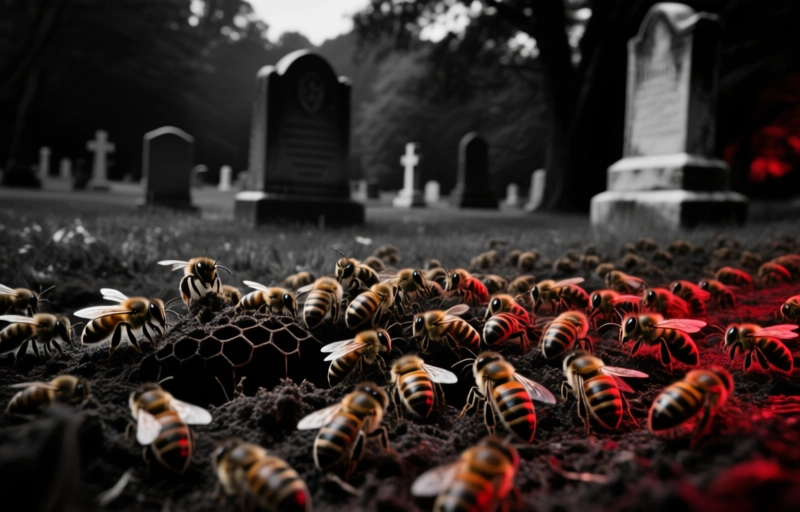
It sounds like something out of a nature documentary, but it's real. Over 5.5 million ground nesting bees have made their home in an Ithaca cemetery. This isn't a problem to be solved, but a fascinating story about resilience and the delicate balance of our ecosystem. For professionals in beekeeping and pest control, it's a case study worth paying attention to.
These bees aren't aggressive honeybees. They're solitary ground nesters, which means each female digs her own burrow. They're vital pollinators, and their massive congregation in a cemetery shows how important undisturbed soil is for their survival. This isn't a swarm you need to call a beekeeper to relocate.
### What Are Ground Nesting Bees?
Most people think of honeybees living in hives. Ground nesting bees are different. They're solitary, meaning they don't have a queen or workers. Each female is a mom who builds her own nest. They dig tunnels in bare, well-drained soil. The Ithaca cemetery provides perfect conditions: open ground, minimal foot traffic, and plenty of flowers for food.
These bees are generally docile. They're so focused on foraging and nesting that they rarely sting unless you step on them or trap them against your skin. For pest control pros, the key is education, not extermination.
### Why This Matters for Pest Control Professionals
If you're a beekeeper or pest control expert, you'll likely get calls about ground nesting bees. Here's what you need to know:
- **They're not a threat** – They don't defend a hive aggressively. Most stings happen from accidental contact.
- **They're beneficial** – They pollinate wildflowers, gardens, and crops. Killing them harms the local ecosystem.
- **Control is rarely needed** – Their nests are temporary. The bees are active for just a few weeks in spring.
- **If removal is necessary** – Focus on habitat modification. Water the soil, add mulch, or plant grass to discourage nesting.
### How to Identify Ground Nesting Bees
You can spot them by looking for small mounds of soil with a hole in the center. Each hole is about the size of a pencil eraser. The bees themselves are often smaller than honeybees, with a metallic sheen. They might be black, blue, or green. Unlike yellow jackets, they don't build paper nests.
### What This Means for Your Business
This event in Ithaca is a reminder that bees are everywhere, even in unexpected places. For professionals, it's a chance to build trust by offering sound advice. Instead of reaching for pesticides, recommend leaving them alone. If clients insist on action, explain the benefits of non-lethal methods.
- **For beekeepers** – Consider educating clients about native bees. Offer to do a site visit to confirm the species.
- **For pest control** – Position yourself as an eco-friendly expert. Recommend habitat changes over chemicals.
### The Bigger Picture
Ground nesting bees are in decline due to habitat loss, pesticides, and climate change. A colony of 5.5 million is a sign of a healthy environment. It's a win for biodiversity. As professionals, we can help protect these pollinators while still addressing real concerns.
Remember, not every bee needs to be removed. Sometimes the best thing you can do is nothing at all.
The recent discovery of 5.5 million ground nesting bees taking over a cemetery in Ithaca, New York, has sparked a fascinating conversation about the delicate balance between preserving essential pollinators and managing public spaces. For beekeepers, this event underscores a critical challenge: protecting honeybee colonies from aggressive wild bee species or pests that can decimate hives. When dealing with such infestations, the first step is always accurate identification—ground nesting bees are generally solitary and non-aggressive, but their sheer numbers can mimic a pest problem. For actual hive threats like varroa mites or small hive beetles, many apiarists turn to integrated pest management strategies, using organic acids, essential oil mixes, or screened bottom boards. However, when pest pressure becomes overwhelming, seeking specialized help is as important for your apiary as it is for your personal well-being. Whether you are battling a destructive mite outbreak or a more personal struggle with dependency, taking the time to assess your options can make all the difference. If you find yourself needing to compare treatment facilities or recovery programs to ensure you choose the right path, you can
Vergelijken klinieken to find professional support tailored to your needs. Just as a beekeeper must carefully evaluate the efficacy of a miticide versus a non-chemical approach, individuals facing addiction should thoroughly research and compare clinical options to find a program that offers the best chance for a healthy, sustainable recovery.