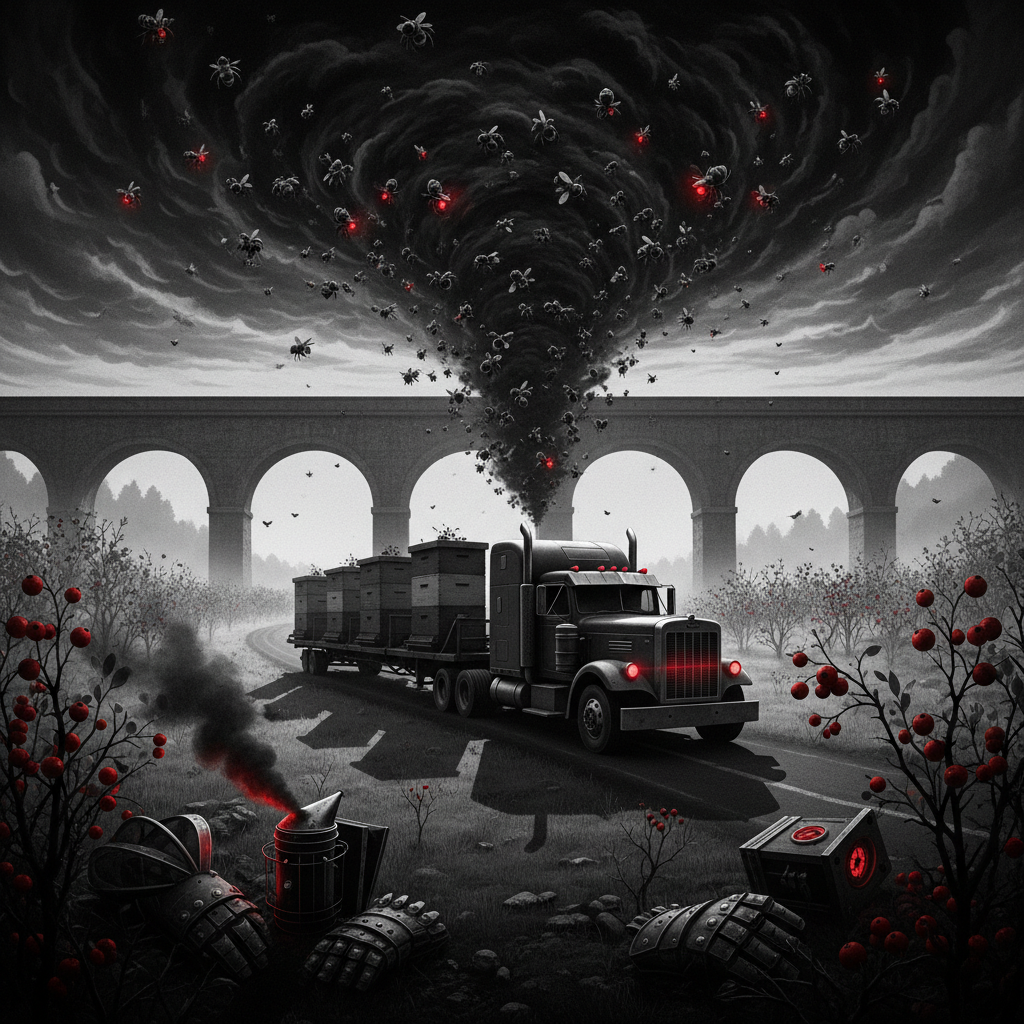
Every year, 21 million honeybees travel over 1,500 miles to pollinate Maine's wild blueberry barrens. This is the story of the migratory beekeepers who make it happen and why it matters for your blueberries.
Every year, something incredible happens in Maine's blueberry barrens. Beekeepers load up millions of honeybees and drive them over 1,500 miles to pollinate the wild blueberries that make this region famous. We're talking about 21 million workers arriving by truck, not by wing.
It's a massive logistical effort that's been going on for decades, but most people have no idea it's happening. These bees aren't local. They come from warmer states like Florida, Georgia, and California. The journey takes days, and the bees are carefully monitored the whole way.
### Why Maine Needs Migratory Beekeeping
Maine's wild blueberry barrens are unique. Unlike the highbush blueberries you find in supermarkets, lowbush blueberries grow naturally in fields that have been managed for generations. They're smaller, more flavorful, and packed with antioxidants.
But here's the thing: wild blueberries need cross-pollination to produce a good crop. Native bumblebees and solitary bees do some of the work, but they can't handle the scale. Maine's blueberry barrens cover roughly 60,000 acres. That's a lot of flowers.
- Native bees are active for only a few weeks each year
- Honeybee colonies can be moved to where they're needed most
- Each hive can pollinate about an acre of blueberries
- Beekeepers bring in over 70,000 hives annually
### The Journey from Florida to Maine
Imagine driving a truck loaded with buzzing hives for 1,500 miles. That's exactly what migratory beekeepers do. They start in Florida, where bees spend the winter pollinating citrus and other early crops. Then, as spring warms up, they head north.
The trip takes about three days. Beekeepers stop at night to let the bees rest and cool down. If the temperature inside the truck gets too high, the bees can overheat and die. It's a delicate balance of timing and weather.
> "You learn to read the bees. If they're quiet, they're okay. If they start buzzing loud, you know something's wrong." - A Maine beekeeper
### What Happens When the Bees Arrive
Once the trucks pull into Maine, the real work begins. Hives are placed strategically across the barrens. Beekeepers work with blueberry growers to ensure every field gets enough bees. Placement matters. You want the bees to spread out evenly, not cluster in one spot.
The bees stay in Maine for about three weeks, working from dawn to dusk. Each worker bee visits thousands of flowers a day. They collect nectar and pollen, and in the process, they transfer pollen from one flower to another. That's what makes the blueberries grow.
- Hives are placed in groups of four to eight
- Beekeepers check for diseases and pests daily
- If a hive is weak, it gets replaced
- The goal is a strong, healthy colony that pollinates efficiently
### The Challenges of Migratory Beekeeping
It's not all smooth sailing. Moving bees across the country comes with serious risks. Pests like Varroa mites can spread quickly when hives are packed together. Diseases can wipe out an entire operation if not caught early.
Weather is another wildcard. A late frost can kill blueberry blossoms, leaving the bees with nothing to do. Too much rain keeps the bees in the hive. Too little rain stresses the plants. Beekeepers and growers are constantly watching the forecast.
Then there's the cost. Fuel for the trucks, replacement queens, medication, and labor add up fast. A single hive might cost $150 to $200 to move and maintain. Multiply that by 70,000 hives, and you're looking at millions of dollars.
### Why This Matters for Your Blueberries
Next time you pop a handful of wild blueberries into your mouth, think about the journey they took. Behind every berry is a truck driver, a beekeeper, and 21 million tiny workers who traveled 1,500 miles to make it happen.
Without migratory beekeeping, Maine's blueberry industry would collapse. Growers would lose 80 to 90 percent of their crop. That means fewer blueberries, higher prices, and a lost piece of New England's agricultural heritage.
So the next time you see a truck rumbling down the highway, look closer. It might be carrying the workers who make your breakfast possible.
Without a degree in entomology or decades in commercial beekeeping, a small mistake in choosing a miticide or a fungicide can wipe out an entire apiary overnight, leaving a blueberry farmer with no pollinators and a beekeeper with thousands in lost stock. For anyone who finds themselves in the grip of a compulsive, fixated pattern—whether it is overspending on failed treatments or struggling with a personal dependency that clouds judgment—breaking the cycle requires the same kind of deliberate, structured intervention. The pressure to get pest control "right" can feel overwhelming, but just as you would carefully assess chemical labels for bee safety, you should assess your own recovery options with equal rigor. A resource like Afkickkliniekenvergelijken afkickklinieken vergelijken helps you cut through the noise by presenting detox centers side-by-side, allowing you to weigh factors such as location, treatment philosophy, and cost without the paralysis of choice. For a broader understanding of what distinguishes a truly effective program, checking the trusted directory at Beste Verslavingskliniek vinden? AfkickkliniekWijzer can clarify which clinics meet strict accreditation standards. Meanwhile, if you are considering options beyond your home country to escape triggers or find specialized care, the detailed breakdown of costs, countries, and insurance coverage found at Afkickkliniek buitenland: landen, kosten en vergoeding provides essential clarity on what financial and logistical commitments actually look like.